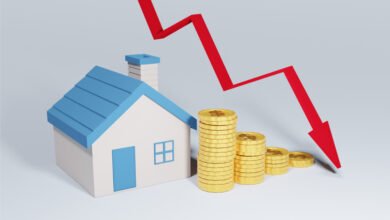
Inflation is the gradual increase in the general level of prices over time. When inflation rises, each unit of currency buys fewer goods and services than before. This is why people often say, “The cost of living is going up,” even if their income stays the same.
Inflation is not just an abstract economic statistic. It affects everyday decisions:
- How far your salary stretches at the supermarket
- Whether keeping money in cash is “safe” in real terms
- How much you should save for long-term goals
- Whether a fixed-rate loan becomes easier or harder to repay over time
The most important concept to understand is the difference between nominal value and real value:
- Nominal = the number printed on the price tag, paycheck, or bank balance
- Real = what that amount can actually buy after adjusting for inflation
This article explains inflation in practical terms, shows how “real value” changes over time, and provides clear examples and tables you can reuse for planning and decision-making.
1) What Inflation Really Means
Inflation describes a broad trend: many prices rising across the economy, not just one product getting more expensive. If only coffee prices rise because of a poor harvest, that is not “inflation” in the economic sense. Inflation is about the average movement of prices across a large “basket” of goods and services.
A simple intuition
If inflation is 3% per year, then—on average—something that costs 100 today might cost about 103 next year.
But inflation compounds. After multiple years, the effect is much larger than people expect, because each year’s increase builds on the last year’s new price level.
2) Nominal vs Real: The Core Idea
Nominal values
Nominal values are measured in the currency of the day, without adjustment. Examples:
- Your salary is 60,000 per year (nominal)
- A rent payment is 1,500 per month (nominal)
- A savings account has 25,000 (nominal)
Real values
Real values adjust for changes in the price level. They answer:
- “What is my salary worth in today’s purchasing power?”
- “Is my savings balance actually growing, or just keeping up with prices?”
- “Did my wage increase beat inflation?”
Real values matter for long-term thinking because they reflect living standards and purchasing power, not just larger numbers.
3) Why Inflation Happens
Inflation can be driven by several forces. In reality, more than one can operate at the same time.
Demand-driven inflation (demand-pull)
When total demand grows faster than the economy’s capacity to produce goods and services, prices can rise. Common contributors include:
- Strong consumer spending
- Rapid credit growth
- Large increases in government or private sector spending
Supply-driven inflation (cost-push)
Prices can rise because production becomes more expensive or supply is disrupted, for example:
- Energy or raw material price shocks
- Shipping disruptions
- Poor harvests or resource shortages
- Increased production costs due to new constraints
Built-in inflation (expectations and wage-price dynamics)
If businesses and households expect inflation, they may act in ways that reinforce it:
- Workers seek higher wages to keep purchasing power
- Businesses raise prices anticipating higher costs
- Suppliers renegotiate contracts
Expectations matter because inflation is partly a “social” phenomenon: people set prices and wages based on what they think will happen next.
4) Measuring Inflation: Price Indices and Baskets
Inflation is typically measured by a price index—a statistical estimate of how prices change for a representative basket of goods and services.
The basket approach
The basket usually includes categories such as:
- Food and beverages
- Housing and utilities
- Transportation
- Healthcare
- Education
- Clothing
- Recreation and services
Because spending patterns differ, any single index is an approximation. Your personal inflation rate may be higher or lower than an official index depending on what you buy (for example, if your budget is heavily weighted toward housing or education).
5) The Math: How Inflation Erodes Real Value
Inflation’s impact over time is easiest to see through compounding.
Future price with inflation
If something costs P0 today and inflation is i per year for n years, the estimated future price is:
P_future = P0 * (1 + i)^n
Purchasing power of money over time
If you keep M0 in cash and inflation is i for n years, the purchasing power (in today’s money) becomes:
Real_value_today_terms = M0 / (1 + i)^n
This second formula is the “real value” lens: even if the nominal amount stays the same, its ability to buy things declines.
6) How 100 Loses Value Under Inflation
The table below shows how much 100 is worth in today’s purchasing power after inflation over time (assuming the money is held as cash with no interest).
| Annual Inflation | After 5 Years | After 10 Years | After 20 Years | After 30 Years |
|---|---|---|---|---|
| 2% | 90.57 | 82.03 | 67.30 | 55.20 |
| 3% | 86.26 | 74.41 | 55.37 | 41.20 |
| 5% | 78.35 | 61.39 | 37.69 | 23.14 |
| 8% | 68.06 | 46.32 | 21.45 | 9.94 |
How to read this:
At 3% inflation, holding 100 as cash for 30 years reduces its purchasing power to about 41.20 in today’s terms—meaning you effectively lose almost 59% of its real value.
7) Example: The “Same Salary” Trap
Suppose your salary stays unchanged at 50,000 per year for 10 years. If inflation averages 3%, your real salary declines, even though the nominal number is unchanged.
Real value after 10 years:
Real_salary = 50,000 / (1.03)^10 ≈ 37,205
So in purchasing-power terms, your salary effectively falls from 50,000 to about 37,205 (in today’s money). You would likely feel this as:
- A tighter budget
- Harder trade-offs
- Less ability to save
This is why wage growth needs to be compared to inflation, not just looked at in nominal terms.
8) Real Return vs Nominal Return
When your savings or investments earn a return, what matters is real return—the return after accounting for inflation.
Approximation (good for small rates)
Real_return ≈ Nominal_return - Inflation
More accurate formula
Real_return = (1 + nominal_return) / (1 + inflation) - 1
Example
- Investment return: 6%
- Inflation: 3%
Approximation: 6% - 3% = 3% real
Exact:
(1.06 / 1.03) - 1 ≈ 2.91% real
The gap is not huge at these rates, but the exact formula matters more when inflation is high.
9) What Different “Safe” Returns Mean After Inflation
People often celebrate a “positive return,” but inflation can turn a seemingly good result into stagnation—or even a real loss.
| Nominal Return | Inflation | Real Return (Approx.) | What It Usually Feels Like |
|---|---|---|---|
| 2% | 3% | -1% | Savings grow, lifestyle shrinks |
| 4% | 3% | 1% | Slight progress |
| 6% | 3% | 3% | Meaningful growth over time |
| 8% | 5% | 3% | Growth, but less than expected |
| 10% | 8% | 2% | “High returns” don’t go far |
A key takeaway: Inflation is a silent benchmark your money must beat to truly grow.
10) Inflation and Everyday Life: Where You Notice It Most
Inflation does not show up evenly. Some categories can rise quickly while others stay stable or even fall.
You tend to feel inflation more when:
- Housing costs rise (rent, mortgage payments for new borrowers, maintenance)
- Food and essentials increase (because you buy them frequently)
- Services rise (repairs, childcare, education, healthcare)
- Energy/transport spikes (fuel, utilities, logistics)
Meanwhile, technology-related items sometimes fall in price or improve in quality at the same cost. This unevenness explains why people can disagree about inflation even within the same city.
11) Inflation Helps Some People and Hurts Others
Inflation is often described as “bad,” but its effects depend on your position.
Who tends to be hurt by inflation?
- People with fixed incomes that do not adjust upward
- Savers holding a lot of wealth in cash
- Workers whose wages lag behind inflation
- Anyone planning a long-term goal without inflation assumptions
Who can benefit (or be partially protected)?
- Borrowers with fixed-rate debt (because they repay with “cheaper” money over time)
- Owners of assets that may rise with inflation (not guaranteed)
- People whose income is indexed or quickly adjusts
Inflation shifts purchasing power. It is not neutral.
12) Debt Example: Why Fixed Payments Can Feel Easier Later
Consider a fixed monthly loan payment. If your income rises over time (even modestly) while your payment stays fixed, the payment can become a smaller share of your budget.
Simplified illustration
- Monthly payment: 1,000 (fixed)
- Income today: 5,000
- Income grows 3% per year
- After 10 years, income ≈
5,000 * (1.03)^10 ≈ 6,720
Payment share:
- Today:
1,000 / 5,000 = 20% - After 10 years:
1,000 / 6,720 ≈ 14.9%
Inflation and wage growth can reduce the real burden of fixed nominal debts—one reason inflation is closely watched by lenders and borrowers.
13) Planning for the Future: The “Inflation Gap” in Goals
Many people underestimate how inflation changes long-term goals.
Example: A target of 300,000 in 20 years
If inflation averages 3%, the future nominal amount needed to match today’s purchasing power is:
Future_target = 300,000 * (1.03)^20 ≈ 541,800
So “300,000” in 20 years is not the same as “300,000” today. Without inflation adjustment, you may under-save substantially.
14) Translating Today’s Costs Into Future Costs
Assume inflation averages 3% per year.
| Cost Today | In 10 Years | In 20 Years | In 30 Years |
|---|---|---|---|
| 1,000 | 1,344 | 1,806 | 2,427 |
| 10,000 | 13,439 | 18,061 | 24,272 |
| 100,000 | 134,392 | 180,611 | 242,726 |
This table is a practical reminder: long-term planning without inflation is planning with missing numbers.
15) Inflation vs Deflation: Why Mild Inflation Is Often the Norm
Deflation is the opposite of inflation: prices broadly fall over time. While falling prices might sound good, persistent deflation can create economic problems:
- Consumers delay purchases expecting lower prices later
- Businesses earn less revenue and may cut wages or jobs
- Debt burdens grow in real terms (loans become harder to repay)
Because of these dynamics, many economies aim for low and stable inflation rather than deflation.
16) A Practical Framework: How to Think About Inflation in Your Life
Instead of treating inflation as news commentary, treat it as a planning variable.
Use these three steps
- Convert long-term goals into future nominal costs
Use:Future_cost = Cost_today * (1 + i)^n - Evaluate income growth in real terms
Ask: “Is my income rising faster than inflation?” - Assess whether your savings/investments beat inflation
Look at real return:Real_return = (1 + r) / (1 + i) - 1
This approach keeps decisions anchored in purchasing power rather than misleading nominal numbers.

17) Common Inflation Mistakes (And How to Avoid Them)
Mistake 1: Celebrating nominal gains
If your investment grew 5% but inflation was 4%, the real gain is close to 1% (and could be less after taxes/fees).
Mistake 2: Ignoring inflation in long-term goals
Education, housing upgrades, and retirement targets can be substantially underfunded if inflation is not included.
Mistake 3: Using one inflation rate for everything
Your personal inflation rate may differ. Track the biggest categories in your spending (housing, food, transport, healthcare, education) and adjust assumptions accordingly.
Mistake 4: Assuming inflation is constant
Inflation varies. Good planning uses conservative ranges and scenario thinking (for example, a low, medium, and high inflation case).
18) Key Takeaways
- Inflation reduces purchasing power over time; it is a compounding process.
- Nominal values can rise while real values stagnate or decline.
- Real value is the correct lens for salaries, savings, long-term goals, and investment performance.
- Even moderate inflation meaningfully changes outcomes over decades.
- Planning improves dramatically when you translate goals into inflation-adjusted future costs.
FAQs
1) What is the simplest definition of inflation?
Inflation is the broad increase in average prices over time, which reduces how much you can buy with the same amount of money.
2) What is the difference between nominal and real value?
Nominal value is the raw number (price, wage, balance). Real value adjusts that number for inflation to reflect purchasing power.
3) How do I calculate the future price of something with inflation?
Use:
P_future = P0 * (1 + i)^n
where P0 is today’s price, i is the annual inflation rate, and n is the number of years.
4) How do I calculate what my money is worth in today’s purchasing power?
Use:
Real_value = M0 / (1 + i)^n
This tells you what a future amount (or unchanged cash amount) is worth in today’s terms.
5) If my salary rises, how do I know if I’m actually better off?
Compare your wage growth to inflation. If wages rise slower than inflation, your purchasing power declines even if your nominal salary is higher.
6) Why do different people feel inflation differently?
Because households spend differently. If your spending is concentrated in categories rising quickly (like housing or services), your personal inflation rate can exceed an official average.
7) What is a “real return” on savings or investments?
Real return is your return after inflation. A simple approximation is:
Real_return ≈ Nominal_return - Inflation
The more accurate version is:
Real_return = (1 + r) / (1 + i) - 1
8) Does inflation always mean my standard of living gets worse?
Not necessarily. If your income and assets grow faster than inflation, your real standard of living can improve. The risk is when inflation rises faster than your income growth and real returns.
9) Why can inflation make fixed-rate loans easier over time?
Because you repay the same nominal amount while wages and prices may rise. Over time, the fixed payment can become smaller relative to income and general price levels.
10) What inflation rate should I assume for long-term planning?
Many people use a conservative range rather than a single number (for example, low/medium/high scenarios). The best choice depends on your local conditions and the categories you spend on most heavily.