
Hourly wage is the amount of base compensation earned for each hour of work before applicable taxes and payroll deductions.
If an employee earns $27.50 per hour and works 40 paid hours per week for 52 weeks, the simple annualized gross pay is $57,200.
Annualized Pay = $27.50 × 40 × 52 = $57,200
Actual annual income can differ when hours change, unpaid time occurs, overtime is earned, or bonuses and commissions supplement the hourly rate.
Hourly Wage Formula
When total regular pay and regular hours are known:
Hourly Wage = Regular Pay ÷ Regular Hours Worked
Suppose an employee earns $960 for 40 regular hours.
Hourly Wage = $960 ÷ 40
= $24 per Hour
The employee’s base hourly wage is $24.
Gross Pay From Hourly Wage
The reverse calculation is:
Gross Regular Pay = Hourly Wage × Regular Hours
At $24 per hour for 35 hours:
Gross Pay = $24 × 35
= $840
If premium rates or additional compensation apply, they should be calculated separately and then included in gross pay.
Hourly Wage to Weekly Pay
Suppose:
Hourly Wage = $27.50
and:
Hours per Week = 40
Then:
Weekly Gross Pay = $27.50 × 40
= $1,100
A worker with variable hours should use actual hours rather than assuming every week contains 40 paid hours.
Hourly Wage to Annual Pay
A common full-time comparison assumes 40 hours per week for 52 paid weeks.
Annualized Pay = Hourly Wage × 40 × 52
Since:
40 × 52 = 2,080
the shortcut becomes:
Annualized Pay = Hourly Wage × 2,080
At $27.50:
$27.50 × 2,080
= $57,200
Annual Salary to Hourly Equivalent
An annual salary can be converted in the opposite direction.
Hourly Equivalent = Annual Salary ÷ Annual Work Hours
Suppose:
Annual Salary = $62,400
and the comparison uses 2,080 hours.
Hourly Equivalent = $62,400 ÷ 2,080
= $30 per Hour
This does not necessarily mean the salaried employee is legally paid $30 for each hour worked. It is a compensation comparison.
Hourly Wage From Biweekly Pay
Suppose an employee works:
80 Regular Hours
during a two-week pay period and receives:
$2,400 Regular Gross Pay
Then:
Hourly Wage = $2,400 ÷ 80
= $30 per Hour
This works when the paycheck amount being used contains only regular compensation for those 80 hours.
Overtime Example
Suppose:
Hourly Wage = $25
and six hours qualify for time-and-a-half.
Premium rate:
$25 × 1.5 = $37.50
Regular 40-hour pay:
$25 × 40 = $1,000
Overtime pay:
$37.50 × 6 = $225
Total gross:
$1,225
The base hourly wage remains $25 even though the employee’s average gross earnings per hour for that week are higher.
Average Earnings per Hour vs Hourly Wage
Using the previous example:
Total Gross Pay = $1,225
Total Hours = 46
Average gross earnings per hour:
$1,225 ÷ 46
≈ $26.63
This $26.63 is not the employee’s base hourly wage.
It is the average gross compensation per hour after overtime is included.
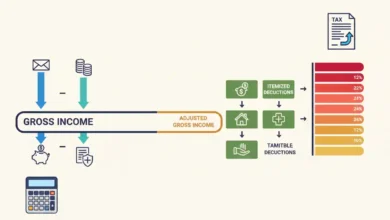
Hourly Wage and Gross Income
Gross income can contain more than hourly wages.
Suppose an employee earns $52,000 from hourly work and receives $5,000 of other included income.
Simplified gross income:
$52,000 + $5,000 = $57,000
The hourly wage is only the rate used to generate one portion of that income.
Hourly Wage and FICA Tax
Applicable FICA tax is calculated from payroll wages under the relevant rules.
If a worker earns $25 per hour, FICA is not calculated by taxing the number 25 itself.
First calculate the applicable wages:
$25 × Hours Worked
Then apply the relevant payroll-tax calculation to the applicable wage base.
Hourly Wage and Import Duty
An import duty uses customs value, quantity, or another trade-related base.
Hourly wage uses time as the compensation base.
Both can involve multiplication, but the formulas solve unrelated financial problems.
Hourly Wage and Income Replacement Ratio
An income replacement ratio can compare replacement income with the earnings that existed before a disruption.
For an hourly worker, expected pre-loss income can first be estimated from wage and normal hours.
Suppose:
Hourly Wage = $25
Normal Weekly Hours = 40
Normal weekly earnings:
$1,000
If replacement income is $650 per week:
Replacement Ratio = $650 ÷ $1,000
= 65%
The wage calculation establishes the denominator used in the replacement analysis.
Variable Hours
Suppose someone earns $22 per hour but works:
25 Hours in Week 1
38 Hours in Week 2
30 Hours in Week 3
The hourly wage remains $22.
Gross pay changes because the number of hours changes.
Week 1:
$22 × 25 = $550
Week 2:
$22 × 38 = $836
Week 3:
$22 × 30 = $660
Hourly rate and total income should not be confused.
Part-Time Annualization
Suppose:
Hourly Wage = $20
Hours per Week = 24
and the worker receives pay for 50 weeks.
Annualized Gross Pay = $20 × 24 × 50
= $24,000
Using 2,080 hours would significantly overstate income for this work schedule.
Unpaid Time Off
Suppose an employee normally works 40 hours weekly at $25 but takes two weeks of unpaid time during the year.
Paid weeks:
50
Annual pay before overtime:
$25 × 40 × 50
= $50,000
The standard 52-week estimate would have produced:
$52,000
Difference:
$2,000
Pay Raise
Suppose hourly wage rises from:
$22 to $24
Dollar increase:
$2 per Hour
Percentage increase:
$2 ÷ $22 × 100
≈ 9.09%
At 2,080 annual hours, the simple annualized increase is:
$2 × 2,080
= $4,160
before considering overtime or unpaid time.
Reverse an Hourly Raise
Suppose the current hourly rate is $26.40 after a 10% raise.
Previous Rate = $26.40 ÷ 1.10
= $24
Subtracting 10% from the new wage would produce $23.76 and would not correctly reverse the increase.
Hourly Wage Needed for an Income Goal
Suppose an employee wants to gross:
$60,000 per Year
using a 2,080-hour schedule.
Required Hourly Wage = $60,000 ÷ 2,080
≈ $28.85 per Hour
If expected paid hours are lower, the required hourly rate rises.
Comparing Hourly Job Offers
Suppose Job A pays $30 per hour and Job B pays $28.
The $2 difference appears straightforward, but annual compensation can also depend on:
- expected hours;
- overtime availability;
- paid leave;
- bonuses;
- benefits.
Hourly wage is an important comparison input, not the entire employment package.
Common Hourly Wage Mistakes
A common error is using 2,080 annual hours for someone who does not work 40 paid hours for 52 weeks.
Another is dividing a paycheck containing overtime or bonuses by regular hours and calling the result the base hourly wage.
Workers can also confuse average earnings per hour with the contractual hourly rate.
Frequently Asked Questions
What is an hourly wage?
It is the base amount of compensation earned for each regular hour of work.
How do I calculate hourly wage from pay?
Hourly Wage = Regular Pay ÷ Regular Hours
How do I calculate regular gross pay?
Gross Pay = Hourly Wage × Hours Worked
How do I estimate annual pay from hourly wage?
Annualized Pay = Hourly Wage × Hours per Week × Paid Weeks
Why is 2,080 commonly used?
It represents 40 hours × 52 weeks.
Does every hourly worker earn 2,080 paid hours?
No.
Does overtime change my base hourly wage?
Normally, premium pay changes compensation for qualifying hours rather than the underlying base rate.
Is average earnings per hour the same as hourly wage?
Not necessarily.
How do unpaid weeks affect annual pay?
They reduce the number of paid hours used in annualization.
Can hourly wage help calculate income replacement?
Yes. Normal wage and hours can establish expected pre-loss earnings.
Is hourly wage gross or net?
An hourly wage normally describes gross compensation before payroll deductions.
Why separate hourly wage from gross income?
The wage is a rate, while gross income is a broader dollar amount measured over a period.