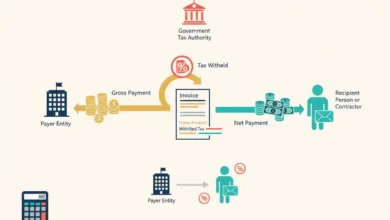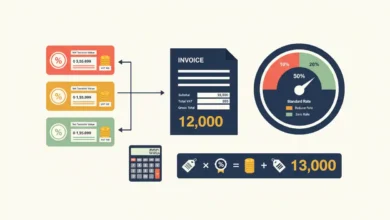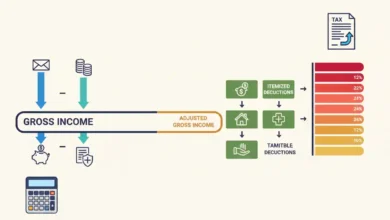

Gross pay is the amount an employee earns before taxes, insurance premiums, retirement contributions, and other payroll deductions are subtracted.
For a salaried employee earning $78,000 per year and paid biweekly, gross pay per ordinary paycheck is:
Biweekly Gross Pay = $78,000 ÷ 26 = $3,000
For an hourly employee, gross pay depends on the hours worked and the applicable rates for regular, overtime, double-time, commission, bonus, or other compensation.
Gross pay is therefore the starting payroll amount, not the amount that ultimately reaches the employee’s bank account.
What Is Gross Pay?
Gross pay measures employment compensation before employee deductions.
A simplified paycheck relationship is:
Net Pay = Gross Pay − Taxes Withheld − Employee Deductions
Gross pay itself is calculated first.
If an employee’s gross paycheck is $3,000 and $850 is withheld or deducted:
Net Pay = $3,000 − $850
= $2,150
The employee earned $3,000 of gross pay even though only $2,150 was received as take-home cash.
Gross Pay Formula for Hourly Employees
For an employee working only regular hours:
Gross Pay = Hourly Rate × Hours Worked
Suppose the hourly wage is $24 and the employee works 38 hours.
Gross Pay = $24 × 38
= $912
The employee’s gross pay for the period is $912 before payroll deductions.
Gross Pay With Overtime
When different hourly rates apply, calculate each category separately.
Suppose an employee earns $25 per hour, works 40 regular hours, and receives time-and-a-half for six additional qualifying hours.
Regular pay:
$25 × 40 = $1,000
Overtime rate:
$25 × 1.5 = $37.50
Overtime pay:
$37.50 × 6 = $225
Total gross pay:
$1,000 + $225 = $1,225
The employee’s gross pay is $1,225.
Gross Pay From Salary
For a salaried employee:
Gross Pay per Period = Annual Salary ÷ Number of Pay Periods
Suppose annual salary is:
$72,000
If paid monthly:
$72,000 ÷ 12 = $6,000
If paid semimonthly:
$72,000 ÷ 24 = $3,000
If paid biweekly:
$72,000 ÷ 26 ≈ $2,769.23
The annual salary is unchanged. Only the number and size of regular paychecks change.
Gross Pay With a Bonus
Suppose an employee’s regular gross paycheck is $3,000 and a $2,500 bonus is paid on the same payroll.
Total Gross Pay = $3,000 + $2,500
= $5,500
The larger gross paycheck does not mean the employee’s recurring salary has permanently increased.
It contains both regular compensation and a one-time or variable payment.
Gross Pay With Commission
Suppose:
Base Pay = $2,500
and commission earned for the period is:
$3,200
Then:
Gross Pay = $2,500 + $3,200
= $5,700
Commission affects the size of gross pay while remaining a distinct compensation component.
Gross Pay vs Gross Income
Gross income can be broader than gross pay.
Gross pay generally refers to employment compensation before payroll deductions.
Gross income can include multiple forms of income beyond one employer’s paycheck.
Suppose an employee earns $80,000 from employment and has $5,000 of other included income.
Employment gross pay:
$80,000
Broader simplified gross income:
$85,000
The terms should not be used interchangeably when other income exists.
Gross Pay and FICA Tax
FICA tax can be deducted from applicable U.S. wages after gross pay is determined.
Suppose:
Gross Pay = $4,000
and illustrative employee FICA withholding totals:
$306
Gross pay remains $4,000.
Pay after that deduction alone becomes:
$4,000 − $306 = $3,694
Other taxes and employee deductions can reduce take-home pay further.
Gross Pay vs Taxable Wages
Gross pay and taxable wages can differ.
Certain payroll deductions or compensation items can receive different tax treatment depending on the applicable rules.
Therefore:
Gross Pay ≠ Automatically Every Payroll Tax Base
Payroll systems often maintain separate taxable wage figures for different taxes.
Gross Pay and Import Duty
An import duty is a customs charge associated with imported goods rather than employee compensation.
A company can incur import duty while also paying wages, but import duty should not be deducted from an employee’s gross pay merely because both are business costs.
The calculation base must match the financial concept.
Gross Pay and Export Duty
The same distinction applies to export duty.
Export duty uses qualifying exported goods or customs value as its base.
Gross pay uses employee compensation.
A 5% export-duty rate and a 5% payroll deduction are unrelated even though the percentages look identical.
Gross Pay From Multiple Compensation Components
Suppose one paycheck contains regular wages of $1,500, overtime of $300, commission of $800, and bonus pay of $400.
Gross Pay = $1,500 + $300 + $800 + $400
= $3,000
This component-based approach is useful when reviewing a pay stub because it shows exactly how the gross amount was formed.
Gross Pay for a Partial Pay Period
Suppose a salaried employee’s ordinary biweekly gross pay is $3,000 but the employee works only part of a pay period under a compensation arrangement that permits proportional proration.
If the applicable paid fraction is 60%:
Prorated Gross Pay = $3,000 × 60%
= $1,800
Actual salary proration can depend on employer policy, employment law, and the reason for the partial period.
Gross Pay Increase
Suppose gross biweekly pay rises from:
$2,500 to $2,650
Increase:
$150
Percentage increase:
$150 ÷ $2,500 × 100
= 6%
If all 26 pay periods receive the increase:
Annual Gross Increase = $150 × 26
= $3,900
Gross Pay vs Employer Cost
An employee’s gross pay is not necessarily the employer’s total cost.
Suppose:
Gross Pay = $4,000
and the employer separately incurs payroll taxes and benefits totaling:
$900
Simplified employer cost:
$4,900
Employee gross pay remains $4,000.
Employer expenses should not be added to the employee’s reported gross paycheck.
Gross Pay vs Take-Home Percentage
Suppose:
Gross Pay = $5,000
Net Pay = $3,650
Take-home percentage:
$3,650 ÷ $5,000 × 100
= 73%
Total difference:
$5,000 − $3,650 = $1,350
That $1,350 can include several taxes and deductions rather than one 27% tax.
Why Gross Pay Matters for Budgeting
Gross pay is useful for comparing compensation and checking payroll calculations, but a household budget should usually use actual take-home cash.
If gross monthly pay is $6,500 while net pay is $4,900, spending commitments based on $6,500 would exceed available paycheck cash by:
$6,500 − $4,900 = $1,600
Gross and net figures serve different purposes.
Common Gross Pay Mistakes
A frequent error is treating gross pay as take-home pay. Another is forgetting overtime, commissions, or bonuses when rebuilding a paycheck.
Employees can also confuse gross pay with gross income or assume every payroll tax is calculated from exactly the same gross-pay base.
Frequently Asked Questions
What is gross pay?
Gross pay is employee compensation before taxes and payroll deductions.
What is the basic hourly gross-pay formula?
Gross Pay = Hourly Rate × Hours Worked
How is salaried gross pay calculated?
Gross Pay per Period = Annual Salary ÷ Pay Periods per Year
Does gross pay include overtime?
Yes, when overtime compensation was earned during the period.
Can commission be part of gross pay?
Yes.
Is a bonus part of gross pay?
Yes, when it is paid as compensation.
Is gross pay the same as gross income?
Not necessarily. Gross income can include additional income outside employment compensation.
Is gross pay the same as taxable wages?
Not always.
Does FICA reduce gross pay?
FICA withholding reduces net pay; it does not change the gross compensation already earned.
Is employer payroll tax part of employee gross pay?
No.
Why is gross pay higher than take-home pay?
Taxes and employee deductions are generally subtracted after gross pay is calculated.
Why calculate gross pay first?
It establishes the payroll starting point from which taxes, deductions, and net pay are determined within the broader Taxes & Pay calculation.