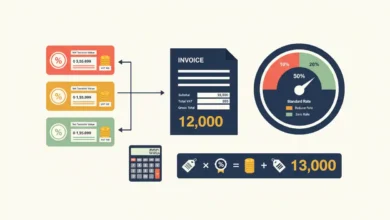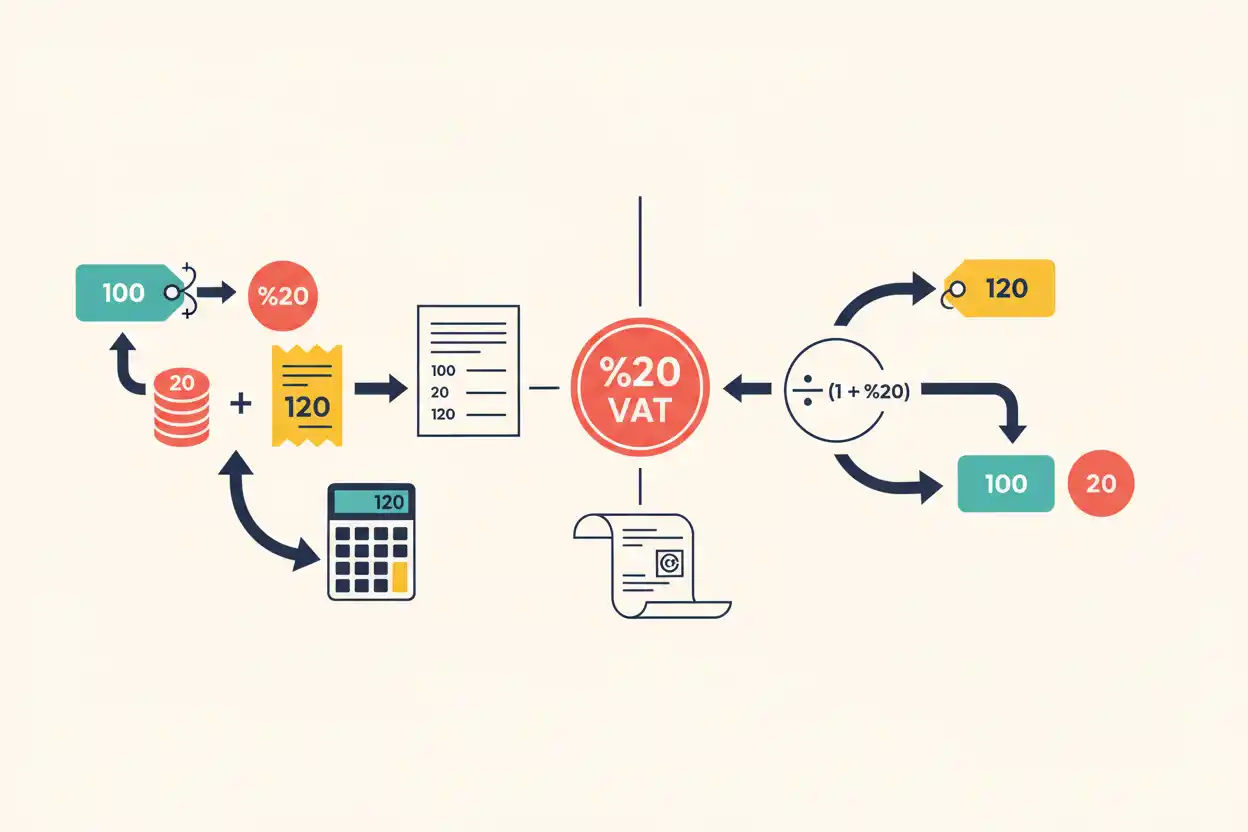
VAT, or value-added tax, is commonly expressed through three connected figures: the net price, the VAT amount, and the gross price.
If a net price is $100 and the applicable VAT rate is 20%:
VAT = $100 × 20% = $20
Gross price:
$100 + $20 = $120
The $100 amount is VAT-exclusive. The $120 amount is VAT-inclusive.
The most common calculation error occurs when reversing a gross price. If $120 already includes 20% VAT, the VAT is not $24. The correct VAT component is $20 because the 20% rate was applied to the $100 net base.
VAT Net Price
The net price is the value before VAT is added.
A simple VAT calculation begins with:
VAT = Net Price × VAT Rate
Then:
Gross Price = Net Price + VAT
or directly:
Gross Price = Net Price × (1 + VAT Rate)
Net-to-Gross VAT Example
Suppose:
Net Price = $250
VAT Rate = 15%
VAT:
$250 × 0.15
= $37.50
Gross price:
$250 + $37.50
= $287.50
The customer pays $287.50 when the VAT is added to the $250 net price.
Gross-to-Net VAT Formula
When the gross price already includes VAT:
Net Price = Gross Price ÷ (1 + VAT Rate)
Suppose:
Gross Price = $287.50
VAT Rate = 15%
Then:
Net Price = $287.50 ÷ 1.15
= $250
Included VAT:
$287.50 − $250
= $37.50
Extract VAT Directly From Gross Price
You can calculate the VAT component without first displaying the net amount:
VAT Included = Gross Price × VAT Rate ÷ (1 + VAT Rate)
Using $287.50 at 15%:
VAT = $287.50 × 0.15 ÷ 1.15
= $37.50
This is especially useful when reviewing VAT-inclusive receipts.
Why VAT Is Not the Rate Times Gross Price
Suppose gross price is:
$120
including 20% VAT.
Incorrect:
$120 × 20% = $24
Correct:
Net Price = $120 ÷ 1.20 = $100
Then:
VAT = $20
The gross amount represents 120% of the net price, not 100%.
VAT Rate vs VAT Amount
A vat rate is a percentage.
VAT itself is a monetary amount.
For example:
VAT Rate = 20%
Net Price = $500
Then:
VAT Amount = $100
Gross Price = $600
The three values should be kept distinct.
VAT Percentage of Gross Price
If the VAT rate is 20% of the net price:
Net Price = $100
VAT = $20
Gross = $120
VAT as a percentage of gross:
$20 ÷ $120 × 100
≈ 16.67%
This does not mean the VAT rate is 16.67%.
The statutory or specified rate in the example remains 20% of the net taxable base.
VAT at 5%
Suppose:
Net Price = $400
VAT Rate = 5%
VAT:
$20
Gross:
$420
Reverse:
$420 ÷ 1.05
= $400
The same formulas work regardless of the rate.
VAT at 10%
Suppose:
Net = $800
Rate = 10%
VAT:
$80
Gross:
$880
VAT fraction of gross:
$80 ÷ $880
≈ 9.09%
Again, the VAT rate is 10% of net, while VAT represents approximately 9.09% of the gross price.
VAT at 25%
Suppose:
Net Price = $200
Rate = 25%
VAT:
$50
Gross:
$250
Reverse:
$250 ÷ 1.25
= $200
VAT and Tax-Inclusive Prices
A VAT-inclusive gross amount follows the same mathematical structure as a general tax-inclusive price.
If the gross price is:
$108
and VAT is 8%:
Net = $108 ÷ 1.08
= $100
VAT:
$8
The general inclusive-price formula is therefore directly applicable when the relevant transaction tax is VAT.
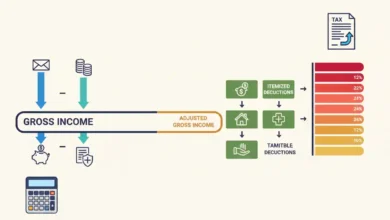
VAT and Taxable Income
Taxable income is an income-tax concept.
A $100 net VAT base is not automatically $100 of personal taxable income.
For a business, VAT collected and paid can also have accounting and tax treatment different from ordinary revenue and expenses.
The phrase “taxable amount” must therefore be interpreted within the tax system being calculated.
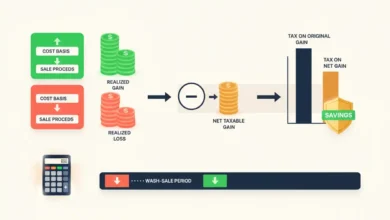
VAT and Tax-Loss Harvesting
Tax-loss harvesting involves realizing investment losses to manage capital gains and other tax effects.
VAT concerns taxable supplies of goods or services within a VAT system.
A capital loss cannot simply be subtracted from a VAT invoice because the tax bases are unrelated.
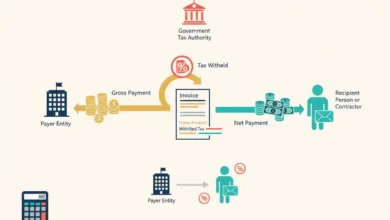
VAT and Withholding Tax
Withholding tax involves tax deducted from a payment before the recipient receives the net cash.
VAT generally changes the transaction amount by adding tax to a taxable base.
These mechanisms move in opposite-looking directions mathematically:
VAT: Net Amount + Tax = Gross Invoice
while a simple withholding example is:
Gross Payment − Withholding = Net Payment
They should not be confused.
Net Invoice With VAT
Suppose an invoice contains:
Services:
$600
Goods:
$400
Net subtotal:
$1,000
At an illustrative VAT rate of 15%:
VAT = $1,000 × 15%
= $150
Gross invoice:
$1,150
Mixed VAT Rates
Suppose one item has:
$100 Net at 5%
VAT:
$5
Another has:
$200 Net at 20%
VAT:
$40
Total net:
$300
Total VAT:
$45
Gross:
$345
Blended VAT relative to total net:
$45 ÷ $300
= 15%
Neither individual item necessarily has a 15% VAT rate.
It is only the weighted average across the transaction.
Zero-Rated Amount
Suppose an invoice contains:
$200 Net at 20%
and:
$100 Net at 0%
VAT:
$200 × 20% = $40
Gross invoice:
$200 + $100 + $40
= $340
Applying 20% to all $300 would produce $60 and overstate VAT in this simplified transaction.
Exempt vs Zero-Rated
A zero rate mathematically produces:
VAT = Taxable Base × 0% = $0
An exempt transaction can also result in no VAT being charged to the customer.
However, zero-rated and exempt treatment can have different legal and input-tax consequences within real VAT systems.
The invoice arithmetic alone does not determine the underlying legal category.
VAT-Inclusive Discount
Suppose a product is displayed at:
$120 Including 20% VAT
A 25% discount is applied to the final price:
$120 × 75%
= $90
If the reduced amount remains VAT-inclusive at 20%:
Net Price = $90 ÷ 1.20
= $75
VAT:
$15
Net Discount Then VAT
Starting from the original $100 net price:
Discount:
$100 × 25% = $25
Discounted net:
$75
VAT:
$75 × 20% = $15
Gross:
$90
The same result occurs because the same proportional discount applies to the full VAT-inclusive amount.
VAT Increase
Suppose net price remains:
$100
VAT rises from:
15% to 20%
Old gross:
$115
New gross:
$120
Increase in customer price:
$5
Percentage increase in gross price:
$5 ÷ $115 × 100
≈ 4.35%
A 5-percentage-point VAT-rate increase does not mean the final price necessarily rises 5% relative to the old gross price.
VAT Decrease
Suppose the rate falls:
20% → 10%
and net price stays at $100.
Old gross:
$120
New gross:
$110
Price reduction:
$10
Relative reduction:
$10 ÷ $120
≈ 8.33%
VAT Collected by a Business
Suppose a business sells goods with:
Net Sales = $50,000
at an illustrative 20% VAT rate.
Output VAT:
$10,000
Gross invoices:
$60,000
The business should not automatically describe the full $60,000 as net sales revenue merely because customers paid that amount.
The accounting treatment depends on the applicable VAT and financial-reporting rules.
Input VAT Concept
Suppose a business purchases inputs for:
$12,000 Net
with:
$2,400 VAT
and later charges:
$10,000 Output VAT
A simplified VAT-settlement illustration might consider:
Output VAT − Allowable Input VAT
$10,000 − $2,400
= $7,600
Actual input-tax recovery depends on the relevant VAT jurisdiction and rules.
Common VAT Mistakes
The most common error is multiplying a VAT-inclusive gross price by the VAT rate to find the included VAT.
Another is subtracting the VAT percentage directly from gross rather than dividing by the VAT factor.
Businesses can also apply one rate across mixed-rate items or confuse VAT collected with ordinary revenue.
Frequently Asked Questions
What does VAT mean?
VAT means value-added tax.
What is the basic VAT formula?
VAT = Net Price × VAT Rate
How do I calculate gross price?
Gross Price = Net Price × (1 + VAT Rate)
How do I calculate net price from gross?
Net Price = Gross Price ÷ (1 + VAT Rate)
How do I extract VAT from a gross price?
VAT = Gross Price × VAT Rate ÷ (1 + VAT Rate)
What is 20% VAT on $100 net?
$20
with a gross price of $120.
Is the VAT inside $120 equal to 20% of $120?
No. If $120 includes 20% VAT, the included VAT is $20.
Can one invoice contain several VAT rates?
Yes.
Does a zero rate mathematically produce VAT?
No. Multiplying the relevant base by 0% produces zero tax.
Is VAT the same as withholding tax?
No.
Is a VAT-taxable amount the same as personal taxable income?
No.
Why distinguish net from gross?
Because the VAT rate is ordinarily calculated from the net taxable base, while the gross amount already contains the tax.