Finance
-

Emergency Fund: Formula, Meaning & Example
An emergency fund is money reserved for unexpected financial needs such as an essential repair, temporary income interruption, urgent travel,…
Read More » -
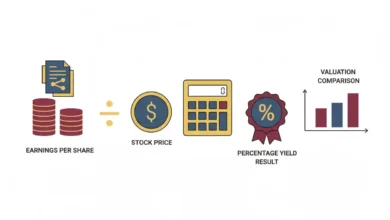
Earnings Yield: Formula, Meaning & Example
Earnings yield compares a company’s earnings per share with its share price. It is essentially the earnings-to-price ratio and can…
Read More » -
Duration: Formula, Meaning & Example
Duration is a fixed-income measure that summarizes the timing of a bond’s cash flows and, in modified form, helps estimate…
Read More » -
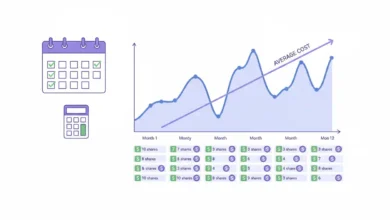
Dollar-Cost Averaging: Formula, Meaning & Example
Dollar-cost averaging is an investment approach in which a fixed amount of money is invested at regular intervals rather than…
Read More » -
Dividend Yield: Formula, Meaning & Example
Dividend yield measures the annual dividends associated with a stock relative to its current share price. If a stock pays…
Read More » -
Discounts: Percent Off & Final Price
Discounts reduce an original price by a specified amount or percentage. A 20% discount does not mean you pay 20%…
Read More » -
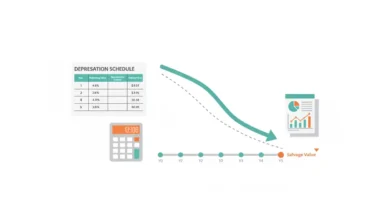
Depreciation: Methods & Schedules
Depreciation is the systematic allocation of the depreciable amount of a long-lived tangible asset across its useful life. Instead of…
Read More » -
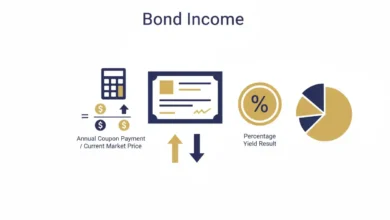
Current Yield: Formula, Meaning & Example
Current yield measures a bond’s annual coupon income relative to its current market price. It is one of the simplest…
Read More » -
Currency Exchange: Rates & Fees
Currency exchange converts an amount expressed in one currency into an equivalent amount expressed in another currency using an exchange…
Read More » -
Cumulative Interest: Running Totals
Cumulative interest is the total interest earned or charged from the beginning of a measurement period through a particular date.…
Read More »