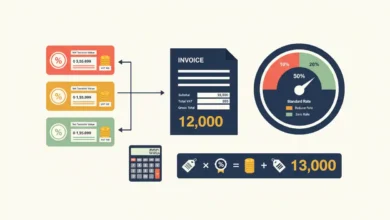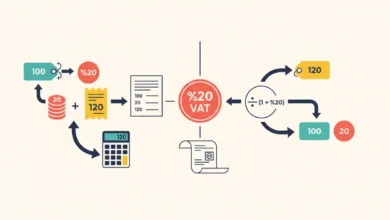

Export duty is a tax or customs charge that a jurisdiction can impose on qualifying goods when they are exported.
The exact goods covered, valuation rules, rates, exemptions, and collection procedures vary by country and product. The calculation can be based on the value of the exported goods, the physical quantity exported, or a combination of both.
If an export shipment has a dutiable value of $250,000 and an illustrative ad valorem export-duty rate of 6%, the duty is:
$250,000 × 6% = $15,000
The exporter should therefore distinguish the duty base from the invoice value, shipping charges, taxes, and other trade costs.
What Is Export Duty?
Export duty is associated with the movement of qualifying goods out of a jurisdiction.
It is different from income tax because the tax base is generally connected to the exported goods or transaction rather than the exporter’s annual income.
The most common mathematical structure is an ad valorem duty:
Export Duty = Dutiable Export Value × Duty Rate
If the duty is quantity based, the formula instead becomes:
Export Duty = Quantity Exported × Duty per Unit
Some systems can combine multiple components.
Ad Valorem Export Duty Example
Suppose:
Dutiable Export Value = $250,000
and the illustrative duty rate is:
6%
Then:
Export Duty = $250,000 × 0.06
= $15,000
If the exporter treats the duty as an additional cost on top of the $250,000 transaction value:
Value + Duty = $250,000 + $15,000
= $265,000
Whether that is the correct commercial cost treatment depends on who legally and contractually bears the duty.
What Does Ad Valorem Mean?
Ad valorem means the duty is based on value.
A 5% duty on $100,000 produces:
$100,000 × 5% = $5,000
The same 5% rate on $500,000 produces:
$500,000 × 5% = $25,000
The percentage stays constant while the dollar duty rises with the dutiable value.
Specific Export Duty
A specific duty is based on quantity rather than value.
Suppose a jurisdiction imposes an illustrative duty of:
$2.50 per Unit
and an exporter ships:
12,000 Units
Then:
Export Duty = 12,000 × $2.50
= $30,000
The market price of each unit does not enter this particular duty formula.
Ad Valorem vs Specific Duty
Suppose 12,000 units have a total customs value of $300,000.
At 5% ad valorem:
$300,000 × 5% = $15,000
At $2.50 per unit:
12,000 × $2.50 = $30,000
The specific duty is twice as large in this example.
The method used by the relevant customs rules therefore matters as much as the headline rate.
Combined Duty
A hypothetical system could combine a percentage charge and a specific amount.
Suppose:
Dutiable Value = $200,000
Ad valorem component:
4%
Specific component:
$1 per Unit
Quantity:
10,000 Units
Value-based duty:
$200,000 × 4% = $8,000
Quantity-based duty:
10,000 × $1 = $10,000
Combined duty:
$8,000 + $10,000
= $18,000
The exact legal structure must be checked because jurisdictions define combined duties differently.
Duty Rate From Duty Paid
If export value and duty paid are known:
Effective Duty Rate = Export Duty ÷ Dutiable Value × 100
Suppose:
Duty = $18,000
Value = $300,000
Then:
Effective Duty Rate = $18,000 ÷ $300,000 × 100
= 6%
This is useful when reconciling trade documents.
Solve for Dutiable Value
If duty and rate are known:
Dutiable Value = Export Duty ÷ Duty Rate
Suppose:
Duty Paid = $12,000
Rate = 4%
Then:
Dutiable Value = $12,000 ÷ 0.04
= $300,000
The result only works when the duty is genuinely calculated as a simple ad valorem percentage.
Export Duty vs FICA Tax
Fica tax is a U.S. payroll-tax concept tied to employee wages and compensation.
Export duty is a customs or trade charge connected with goods crossing a border.
Even if both use percentage calculations, their tax bases are unrelated.
Applying a payroll-tax rate to customs value would be meaningless.
Export Duty and Gross Income
A business’s gross income measures income under the relevant accounting or tax definition.
Export duty can be a cost associated with a particular trade transaction.
Suppose goods are sold for $250,000 and export duty is $15,000.
It does not automatically follow that:
Gross Income = $235,000
The accounting and tax treatment depends on how revenue and expenses are recognized.
Transaction cost and gross-income measurement should remain separate until the appropriate accounting rules are applied.
Export Duty and Estimated Taxes
A company can pay estimated taxes toward expected income-tax liability while also paying export duty on individual shipments.
The two payments should be tracked separately.
One relates to expected annual tax; the other relates to qualifying exports.
Export Duty and Estate Tax
Estate tax is based on a taxable estate rather than exported goods.
This reinforces a basic tax principle:
Correct Tax = Correct Tax Base × Correct Applicable Rule
The percentage alone is never enough.
Export Duty and Effective Tax Rate
Suppose a business pays $50,000 of export duties during a year and earns $1 million of revenue.
Dividing:
$50,000 ÷ $1,000,000 = 5%
creates a descriptive ratio, but it does not turn the business’s effective tax rate into 5%.
Effective income-tax rates and trade-duty burden ratios use different denominators.
Dutiable Value vs Invoice Value
Suppose the invoice price is:
$300,000
but customs rules define the dutiable value as:
$280,000
At 5%:
Using invoice value incorrectly:
$300,000 × 5% = $15,000
Using the correct dutiable value:
$280,000 × 5% = $14,000
Difference:
$1,000
The correct valuation basis is therefore essential.
Currency Conversion
International transactions may be invoiced in one currency while duty is calculated in another.
Suppose the dutiable value is:
€100,000
and the applicable customs conversion produces:
$110,000
At an illustrative 5% rate:
Duty = $110,000 × 5%
= $5,500
Using a different exchange rate can change the tax base.
The customs authority’s required conversion method should therefore be used rather than an arbitrary market quote.
Tiered Export Duty
A hypothetical duty structure could apply different rates at different value levels.
Suppose:
First $100,000:
2%
Next $150,000:
5%
For a $250,000 shipment:
First tier:
$100,000 × 2% = $2,000
Second tier:
$150,000 × 5% = $7,500
Total:
$9,500
Applying 5% to all $250,000 would produce $12,500 and overstate the hypothetical duty by $3,000.
Exemptions and Reduced Rates
Certain exports can qualify for exemptions, reduced rates, quotas, processing arrangements, or other special treatment depending on jurisdiction.
Suppose only $150,000 of a $200,000 shipment is dutiable.
At 4%:
$150,000 × 4% = $6,000
Applying 4% to the entire invoice would incorrectly produce:
$8,000
The taxable portion matters.
Export Duty as a Percentage of Margin
Suppose a shipment produces:
Gross Commercial Margin Before Duty = $40,000
and duty equals:
$15,000
Duty consumes:
$15,000 ÷ $40,000 × 100
= 37.5%
of that pre-duty margin.
A relatively modest duty rate on transaction value can therefore represent a much larger percentage of profit margin.
Pricing to Recover Duty
Suppose an exporter wants to recover a $15,000 duty through the selling price.
If the original price is $250,000:
Required Price Increase = $15,000 ÷ $250,000
= 6%
However, raising the price can affect demand, customs valuation, contracts, or other charges.
Passing the cost to the buyer is a commercial decision, not merely an arithmetic one.
Duty Changes and Pricing
Suppose the rate rises from:
4% to 6%
on a $500,000 dutiable shipment.
Old duty:
$500,000 × 4% = $20,000
New duty:
$500,000 × 6% = $30,000
Increase:
$10,000
The duty rate increased by 2 percentage points, while the dollar duty increased by:
$10,000 ÷ $20,000 = 50%
Percentage points and percentage changes are different measurements.
Common Export Duty Mistakes
A common mistake is applying the rate to invoice value without confirming the customs valuation base.
Another is confusing ad valorem and per-unit duty formulas.
Businesses can also overlook exchange-rate rules, exemptions, tiering, or the difference between export duty and income tax.
Frequently Asked Questions
What is export duty?
Export duty is a tax or customs charge imposed by a jurisdiction on qualifying exported goods.
What is the basic ad valorem formula?
Export Duty = Dutiable Export Value × Duty Rate
What is a specific duty?
It is a duty based on quantity, such as a fixed amount per kilogram, unit, or ton.
How do I calculate a specific export duty?
Duty = Quantity × Duty per Unit
Is invoice value always the dutiable value?
No. The relevant customs valuation rules determine the tax base.
Can export duty use both value and quantity?
Some systems can combine different components.
Is export duty the same as income tax?
No.
Does the exporter always bear the economic cost?
Not necessarily. Contract terms and market pricing can affect who ultimately bears the cost.
Can exemptions reduce export duty?
Potentially, depending on the relevant jurisdiction and product.
Why does currency conversion matter?
Customs value may need to be converted into the currency required for duty calculation.
Can a small duty rate have a large effect on profit?
Yes, especially when profit margins are thin.
Why must the current tariff rules be checked?
Rates, product classifications, valuation methods, and exemptions are jurisdiction-specific and can change.