Finance
-

Beta: Formula, Meaning & Example
Beta measures how an investment’s returns have historically moved relative to the returns of a market benchmark. A beta of…
Read More » -
Average Return: Multiple Periods
Average return summarizes investment performance across multiple periods, but there is more than one way to calculate it. The arithmetic…
Read More » -
Asset Allocation: Risk & Goals
Asset allocation is the process of deciding how a portfolio is divided among different categories of investments, such as stocks,…
Read More » -
APY: How It’s Calculated
APY, or annual percentage yield, measures the effective amount an interest-bearing balance can earn over one year after accounting for…
Read More » -
Annuity Payouts: How Payments Are Estimated
Annuity payouts are the periodic payments an annuity owner receives after money has been converted into an income stream. Depending…
Read More » -
Annuity Due: Formula, Meaning & Example
An annuity due is a series of equal payments made at the beginning of each payment period. That timing makes…
Read More » -
Annuities: Value, Growth, Payouts
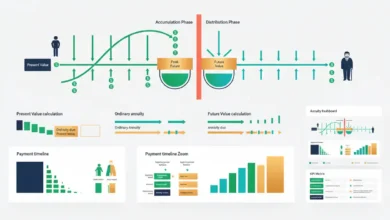
Annuities can refer to two closely related ideas. In financial mathematics, an annuity is a stream of equal payments made…
Read More » -
Annualized Return: Formula, Meaning & Example
Annualized return converts an investment’s performance over a period longer or shorter than one year into an equivalent yearly rate.…
Read More » -
Amortization: Schedule, Principal vs Interest
Amortization is the process of paying a debt down over time through scheduled payments. In a standard amortizing loan, each…
Read More » -
Alpha: Formula, Meaning & Example
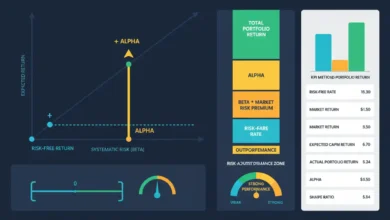
Alpha measures how an investment performed relative to the return expected from a specified benchmark or risk model. In its…
Read More »