Mathematics
-

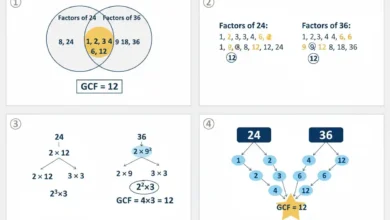
Greatest Common Factor: Formula, Rules & Examples
The greatest common factor of two or more integers is the largest positive integer that divides every number exactly. It…
Read More » -
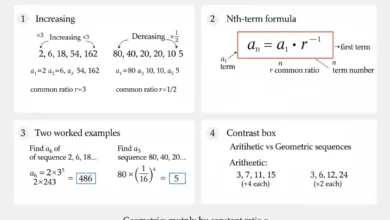
Geometric Sequence: Formula, Rules & Examples
A geometric sequence is a sequence in which each term after the first is obtained by multiplying the preceding term…
Read More » -
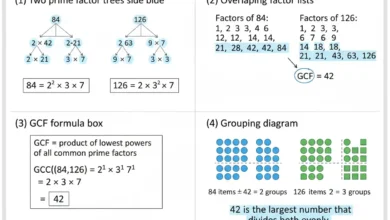
GCF: Greatest Common Factor
GCF stands for greatest common factor. It is the largest positive integer that divides two or more integers exactly, leaving…
Read More » -
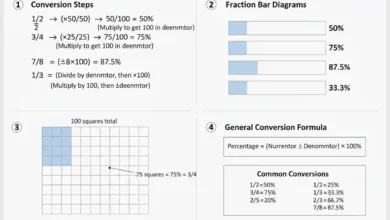
Fractions to Percent: Definition, Formula & Example
Converting fractions to percent means expressing a fractional value as a number of parts per hundred. The basic method is…
Read More » -
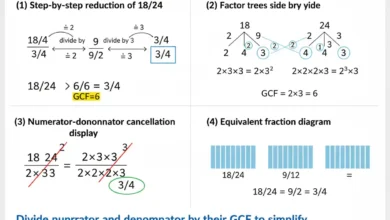
Fraction Simplification: Definition, Formula & Example
Fraction simplification means rewriting a fraction in an equivalent form whose numerator and denominator have no common positive factor greater…
Read More » -
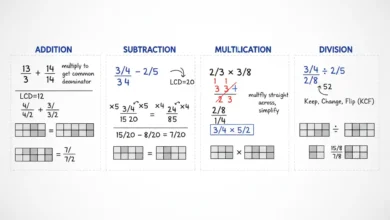
Fraction Operations: Add, Subtract, Multiply, Divide
Fraction operations are the rules used to add, subtract, multiply, and divide fractions. Addition and subtraction generally require a common…
Read More » -
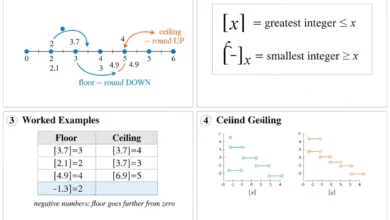
Floor And Ceiling Functions: Formula, Rules & Examples
Floor and ceiling functions map real numbers to nearby integers. The floor function returns the greatest integer less than or…
Read More » -
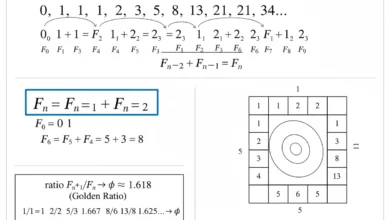
Fibonacci Sequence: Definition, Formula & Example
The Fibonacci sequence is a number sequence in which each new term is the sum of the two preceding terms.…
Read More » -
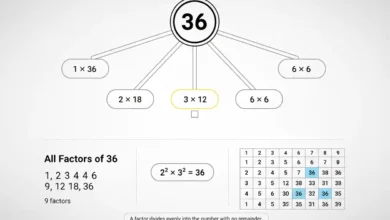
Factors: Pairs & Lists
Factors are integers that divide another integer exactly without leaving a remainder. They can be written individually as a factor…
Read More » -
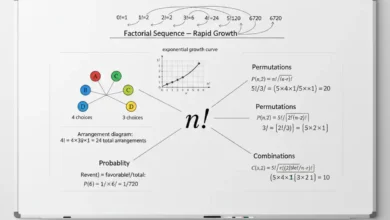
Factorials: n!
Factorials are the sequence of values produced by multiplying consecutive positive integers downward to 1. They are written using n!,…
Read More »