Mathematics
-

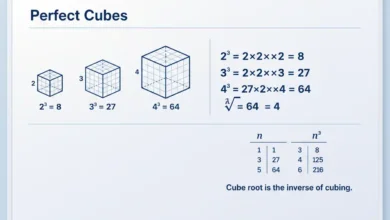
Cube Roots: Formula, Rules & Examples
Cube roots reverse the process of cubing a number. If a number y multiplied by itself three times equals x,…
Read More » -
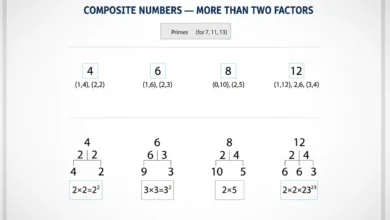
Composite Numbers: Formula, Rules & Examples
Composite numbers are positive integers greater than 1 that have more than two positive factors. In other words, a composite…
Read More » -
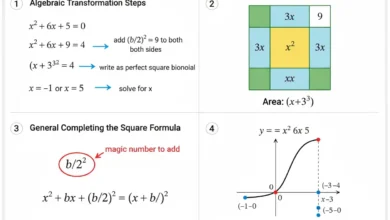
Completing the Square: Definition, Formula & Example
Completing the square is an algebraic method that rewrites a quadratic expression so part of it becomes a perfect square.…
Read More » -
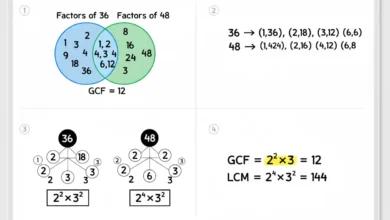
Common Factors: Definition, Formula & Example
Common factors are numbers that divide two or more integers exactly, leaving no remainder. For example, 12 and 18 share…
Read More » -
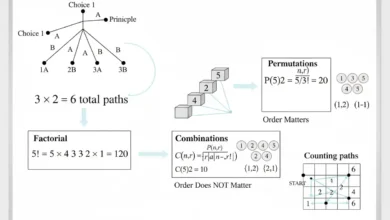
Combinatorics: Definition, Formula & Example
Combinatorics is the branch of mathematics concerned with counting, arranging, selecting, and organizing objects under specific rules. Instead of listing…
Read More » -
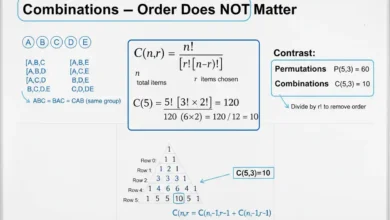
Combinations: nCr
Combinations count how many ways r objects can be selected from n distinct objects when the order of selection does…
Read More » -
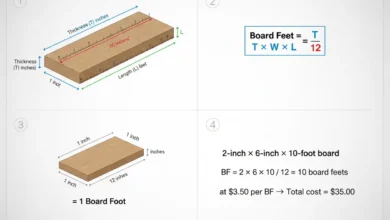
Board Feet: Lumber Measurement
Board feet measure lumber volume. One board foot represents a piece of wood with a volume of 144 cubic inches,…
Read More » -
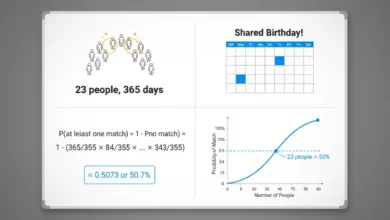
Birthday Paradox: Definition, Formula & Example
The birthday paradox is the surprising result that in a group of only 23 people, the probability that at least…
Read More » -
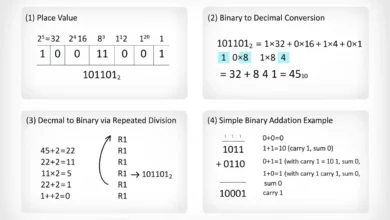
Binary Numbers: Base-2 Basics
Binary numbers use a base-2 positional numeral system containing only two digits: 0 and 1 Each binary place represents a…
Read More » -
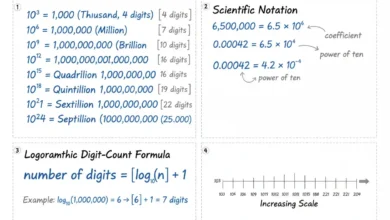
Big Numbers: Digit Length & Scale
Big numbers become easier to understand when you measure their digit length and express their scale using powers of ten…
Read More »