
Pay raise percentage measures the increase in compensation relative to the original pay amount.
If annual salary rises from $60,000 to $66,000, the dollar increase is $6,000.
Pay Raise Percentage = ($66,000 − $60,000) ÷ $60,000 × 100
= 10%
The key is using the old pay as the denominator. Dividing by the new salary produces a different percentage and does not correctly measure the raise.
Pay Raise Percentage Formula
Pay Raise Percentage = (New Pay − Old Pay) ÷ Old Pay × 100
Using symbols:
Raise % = (New − Old) ÷ Old × 100
This formula works for salary, hourly wage, weekly pay, or another consistent compensation amount.
Salary Raise Example
Suppose:
Old Salary = $60,000
New Salary = $66,000
Dollar increase:
$66,000 − $60,000 = $6,000
Divide by the original salary:
$6,000 ÷ $60,000 = 0.10
Convert to percentage:
0.10 × 100 = 10%
The pay raise percentage is 10%.
Why the Old Pay Is the Denominator
Suppose someone incorrectly calculates:
$6,000 ÷ $66,000
≈ 9.09%
That measures the raise as a percentage of the new salary.
The raise was earned relative to the original $60,000 salary, so the correct result is 10%.
Find New Salary From Raise Percentage
When old pay and raise percentage are known:
New Pay = Old Pay × (1 + Raise Rate)
Suppose:
Old Salary = $75,000
Raise = 8%
Then:
New Salary = $75,000 × 1.08
= $81,000
Dollar increase:
$81,000 − $75,000
= $6,000
Find the Dollar Raise
Dollar Raise = Old Pay × Raise Percentage
For:
$75,000 × 8%
= $6,000
Then:
$75,000 + $6,000 = $81,000
Both methods produce the same result.
Reverse a Pay Raise
Suppose the new salary is:
$81,000
after an 8% raise.
To recover the old salary:
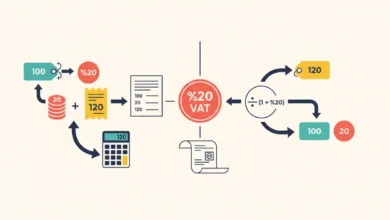
Old Pay = New Pay ÷ (1 + Raise Rate)
Old Pay = $81,000 ÷ 1.08
= $75,000
Subtracting 8% from $81,000 would produce:
$74,520
which is incorrect because the original 8% was calculated from $75,000.
Hourly Pay Raise Percentage
Suppose hourly wage increases:
$25 → $27
Dollar increase:
$2
Raise percentage:
$2 ÷ $25 × 100
= 8%
The hourly pay raise is 8%.
Annual Effect of an Hourly Raise
Suppose the worker receives the same $2 increase and works a modeled 2,080 paid hours per year.
Annual gross increase:
$2 × 2,080
= $4,160
Old annualized pay:
$25 × 2,080
= $52,000
New annualized pay:
$27 × 2,080
= $56,160
Difference:
$4,160
Pay Raise and Pay Frequency
Pay frequency determines how an annual raise appears in individual paychecks.
Suppose annual salary rises:
$62,400 → $67,600
Annual increase:
$5,200
On weekly payroll:
$5,200 ÷ 52 = $100 More per Check
On biweekly payroll:
$5,200 ÷ 26 = $200
On semimonthly payroll:
$5,200 ÷ 24 ≈ $216.67
On monthly payroll:
$5,200 ÷ 12 ≈ $433.33
The raise is the same annual amount despite different paycheck increases.
Pay Raise Percentage vs Broader Pay Raise Analysis
The pay raise decision can involve inflation, responsibilities, market compensation, performance, and total benefits.
Pay raise percentage has a narrower mathematical purpose:
How much did pay increase relative to the previous amount?
Keeping the formula page focused avoids confusing raise measurement with whether a raise is competitive or sufficient.
Raise Percentage and Overtime Pay
A higher base wage can increase overtime pay when overtime is calculated as a multiplier of that base.
Suppose:
Old Hourly Rate = $20
New Hourly Rate = $22
Raise:
10%
At a 1.5× overtime multiplier:
Old overtime rate:
$20 × 1.5 = $30
New overtime rate:
$22 × 1.5 = $33
Overtime rate increased:
$3 ÷ $30 × 100
= 10%
The percentage is unchanged because both rates are multiplied by the same constant.
Raise Percentage and Payroll Tax
Higher gross wages can increase applicable payroll tax amounts.
Suppose gross annual pay rises by:
$6,000
If a particular payroll tax applies to all of that additional wage at an illustrative 1.45% rate:
Additional Tax = $6,000 × 1.45%
= $87
The gross raise is still $6,000.
Tax effects determine how much of it reaches take-home pay.
Raise Percentage and Net Pay
Net pay rarely increases by the full gross raise amount because deductions can rise as gross compensation rises.
Suppose annual gross pay increases:
$6,000
while additional annual deductions attributable to the increase total:
$1,500
Net annual increase:
$6,000 − $1,500
= $4,500
Monthly net increase:
$4,500 ÷ 12
= $375
The gross raise percentage and net-pay percentage can therefore differ.
Net Pay Raise Percentage
Suppose take-home pay increases:
$4,000 → $4,300 per Month
Net dollar increase:
$300
Net raise percentage:
$300 ÷ $4,000 × 100
= 7.5%
If gross pay rose 10%, the 7.5% net increase reflects changes in taxes or deductions.
Both percentages can be useful as long as they are clearly labeled.
Comparing Two Raises
Suppose Employee A receives:
$4,000 Raise on $40,000 Salary
Percentage:
$4,000 ÷ $40,000 = 10%
Employee B receives:
$5,000 Raise on $100,000 Salary
Percentage:
$5,000 ÷ $100,000 = 5%
Employee B receives the larger dollar increase, while Employee A receives the larger percentage raise.
Dollar and percentage comparisons answer different questions.
Successive Raises Compound
Suppose salary is:
$60,000
and receives a 10% raise:
$60,000 × 1.10 = $66,000
A second 10% raise produces:
$66,000 × 1.10 = $72,600
Total increase:
$72,600 − $60,000
= $12,600
Cumulative percentage:
$12,600 ÷ $60,000 × 100
= 21%
Two 10% raises produce a 21% cumulative increase, not 20%, because the second raise applies to the already increased salary.
5% Followed by 8%
Suppose salary begins at:
$50,000
After 5%:
$50,000 × 1.05 = $52,500
After another 8%:
$52,500 × 1.08
= $56,700
Cumulative raise:
$56,700 − $50,000
= $6,700
Percentage:
$6,700 ÷ $50,000
= 13.4%
Adding 5% and 8% would give only 13%, which ignores compounding.
Raise Followed by Pay Cut
Suppose salary rises 10% from $60,000:
$60,000 × 1.10 = $66,000
Then falls 10%:
$66,000 × 0.90 = $59,400
The employee does not return to $60,000.
Overall change:
$59,400 − $60,000 = −$600
Percentage:
−$600 ÷ $60,000
= −1%
Equal percentage increases and decreases do not cancel because they use different bases.
Raise Needed to Reach a Target Salary
Suppose:
Current Salary = $70,000
Target Salary = $80,000
Required increase:
$10,000
Required pay raise percentage:
$10,000 ÷ $70,000 × 100
≈ 14.29%
A 10% raise would not be sufficient because it would produce only:
$77,000
Salary After Inflation
Suppose pay rises:
5%
while prices rise by:
3%
A rough approximation of the real improvement is:
5% − 3% = 2%
The exact real change is:
1.05 ÷ 1.03 − 1
≈ 1.94%
A nominal raise therefore does not translate one-for-one into improved purchasing power.
Percentage Points vs Percentage Raise
Suppose a bonus rate rises from:
5% to 7%
The rate increased by:
2 Percentage Points
Relative percentage increase:
(7% − 5%) ÷ 5%
= 40%
The same distinction applies whenever compensation rates themselves are expressed as percentages.
Pay Cut Percentage
The formula works for decreases too.
Suppose salary falls:
$80,000 → $72,000
Change:
−$8,000
Percentage:
−$8,000 ÷ $80,000
= −10%
The employee received a 10% pay cut.
Common Pay Raise Percentage Mistakes
The most common error is dividing the raise by the new salary instead of the old salary.
Another is adding successive percentage raises instead of compounding them.
People also confuse the gross raise with the increase in take-home pay or assume a 10% raise followed by a 10% cut returns compensation to its starting level.
Frequently Asked Questions
What is pay raise percentage?
It measures the increase in pay relative to the original compensation amount.
What is the formula?
Pay Raise Percentage = (New Pay − Old Pay) ÷ Old Pay × 100
What is the raise from $60,000 to $66,000?
10%
How do I calculate the new salary from a raise percentage?
New Pay = Old Pay × (1 + Raise Rate)
How do I calculate the dollar raise?
Dollar Raise = Old Pay × Raise Rate
How do I reverse a raise?
Old Pay = New Pay ÷ (1 + Raise Rate)
Can I use the formula for hourly wages?
Yes.
Does a 10% gross raise mean net pay rises 10%?
Not necessarily.
Do two 10% raises equal a 20% cumulative raise?
No. They produce a 21% cumulative increase.
Does a 10% raise followed by a 10% cut cancel out?
No.
How do I calculate the raise needed for a target salary?
Required Raise % = (Target Pay − Current Pay) ÷ Current Pay × 100
Why use the old salary as the denominator?
Because the raise measures how much compensation increased relative to the amount earned before the raise.