Finance
-

Debt-to-Income Ratio: DTI
The debt-to-income ratio, or DTI, compares monthly debt payments with gross monthly income. The standard formula is: Debt-to-Income Ratio =…
Read More » -
Debt Snowball: Formula, Meaning & Example
The debt snowball is a repayment strategy that focuses extra money on the smallest debt balance first, regardless of interest…
Read More » -
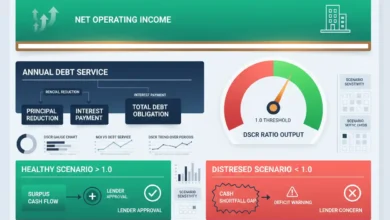
Debt Service Coverage Ratio: Formula, Meaning & Example
The debt service coverage ratio, or DSCR, measures how much qualifying income or cash flow is available relative to required…
Read More » -
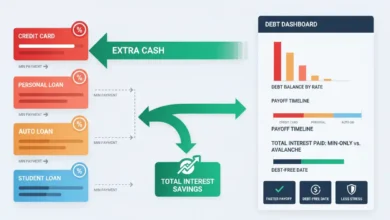
Debt Payoff Strategy: Snowball vs Avalanche
A debt payoff strategy determines the order in which extra repayment money is applied when you owe more than one…
Read More » -
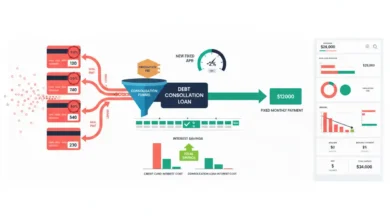
Debt Consolidation Loan: Formula, Meaning & Example
A debt consolidation loan is a new loan used to repay multiple existing debts, replacing several balances and payment schedules…
Read More » -
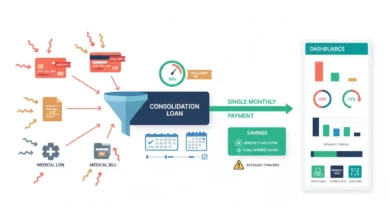
Debt Consolidation: Pros, Cons, Savings
Debt consolidation combines multiple debts into a simpler repayment structure, usually by replacing several balances with one new loan or…
Read More » -
Debt Avalanche: Formula, Meaning & Example
The debt avalanche is a repayment strategy that directs extra money toward the debt with the highest interest rate while…
Read More » -
Daily Simple Interest: Formula, Meaning & Example
Daily simple interest calculates interest from an outstanding principal balance based on the number of days that balance remains unpaid.…
Read More » -
Credit Utilization Ratio: Formula, Meaning & Example
The credit utilization ratio measures how much revolving credit you are using compared with the amount available to you. The…
Read More » -
Credit Score Factors: Formula, Meaning & Example
Credit score factors are the pieces of credit-report information that a scoring model uses to estimate how likely a borrower…
Read More »