Finance
-

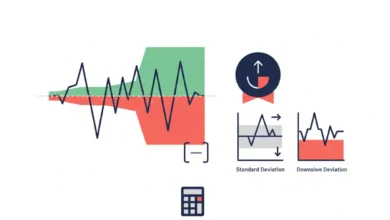
Sortino Ratio: Formula, Meaning & Example
The Sortino ratio measures investment return relative to downside risk rather than total volatility. Suppose a portfolio earns 10%, the…
Read More » -
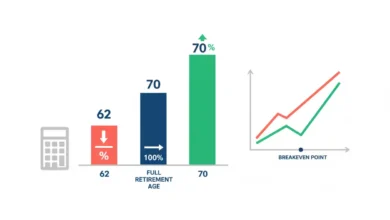
Social Security Benefits: Claiming Age Impact
Social Security benefits can change substantially depending on the age at which retirement benefits begin. Under current rules, retirement benefits…
Read More » -
Sinking Fund: Formula, Meaning & Example
A sinking fund is money deliberately set aside over time for a known future expense. Instead of waiting until a…
Read More » -
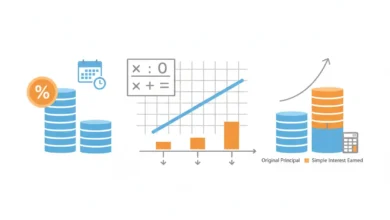
Simple Interest: Formula & Examples
Simple interest calculates interest from the original principal rather than from a balance that grows through accumulated interest. If $15,000…
Read More » -
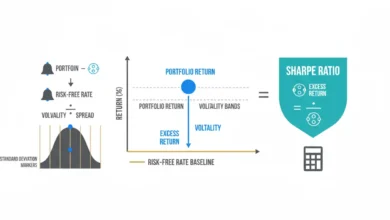
Sharpe Ratio: Formula, Meaning & Example
The Sharpe ratio measures how much excess investment return a portfolio generated relative to its volatility. A portfolio earning 10%…
Read More » -
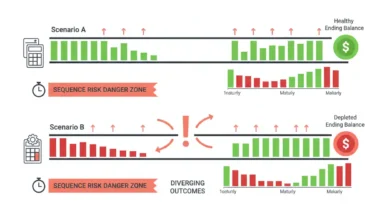
Sequence Of Returns Risk: Formula, Meaning & Example
Sequence of returns risk is the risk that the order of investment gains and losses changes a portfolio’s outcome when…
Read More » -
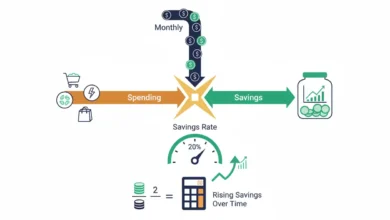
Savings Rate: Formula, Meaning & Example
Savings rate measures the percentage of income that is saved rather than spent. If a household takes home $6,200 per…
Read More » -
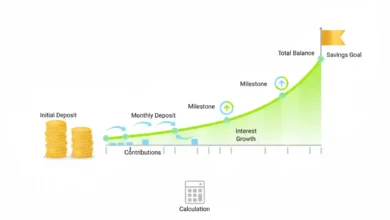
Savings Growth: Deposits & Rate
Savings growth comes from three main components: the amount already saved, new deposits, and the return or interest earned over…
Read More » -
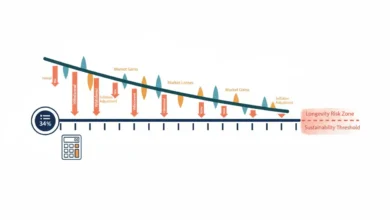
Safe Withdrawal Rate: SWR Basics
A safe withdrawal rate is a retirement-planning percentage intended to estimate how much of an investment portfolio can be withdrawn…
Read More » -
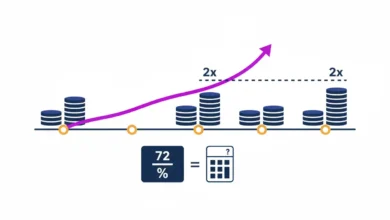
Rule of 72: Doubling Time Shortcut
The Rule of 72 is a quick mental-math shortcut for estimating how long an amount of money takes to double…
Read More »