Statistics & Probability
-

Confidence Level: Definition, Formula & Example
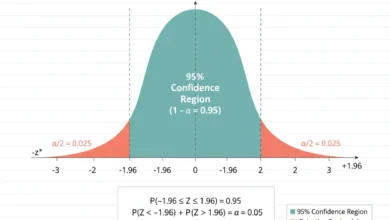
A confidence level specifies the long-run success rate of a confidence-interval procedure under repeated sampling. A 95% confidence level means…
Read More » -
Confidence Intervals: Definition, Formula & Example
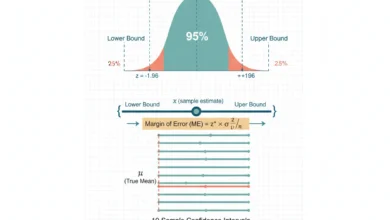
Confidence intervals estimate an unknown population parameter by giving a range of plausible values rather than only a single point…
Read More » -
Chi-Square: Definition, Formula & Example
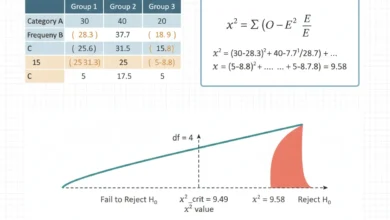
Chi-square is a statistical method used to compare observed categorical frequencies with frequencies expected under a specified null hypothesis. The…
Read More » -
Binomial Probability: Definition, Formula & Example
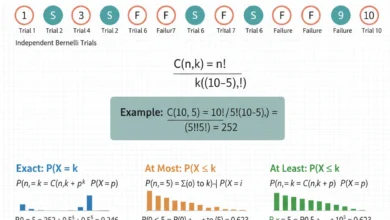
Binomial probability measures the chance of obtaining a specified number of successes in a fixed number of repeated trials when…
Read More » -
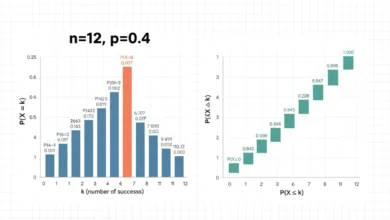
Binomial Distribution: PMF & CDF
The binomial distribution is a discrete probability distribution that models the number of successes observed in a fixed number of…
Read More » -
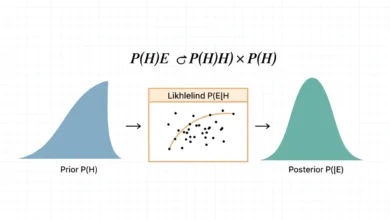
Bayes’ Theorem: Definition, Formula & Example
Bayes’ theorem is a probability rule for updating the probability of an event or hypothesis after new evidence is observed.…
Read More » -
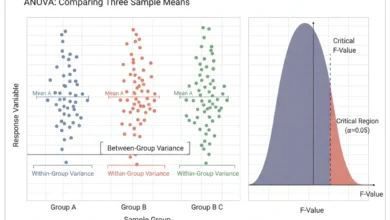
ANOVA: Definition, Formula & Example
ANOVA, short for analysis of variance, is a statistical method used to test whether the means of three or more…
Read More » -
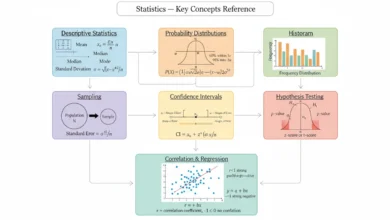
Core Statistics: Complete Guide, Formulas & Examples
Core statistics provides the methods used to describe data, quantify uncertainty, compare groups, estimate population values, test claims, and model…
Read More »