The present value of annuity calculation converts a series of equal future payments into a single value today.
If you expect to receive $1,000 at the end of every month for five years, simply multiplying $1,000 by 60 gives $60,000 of nominal payments. It does not tell you what those future payments are worth today.
At a 6% nominal annual discount rate with monthly periods, those 60 payments have a present value of approximately $51,725.56.
The difference comes from the time value of money: later payments are discounted more heavily than earlier payments.
What Is the Present Value of an Annuity?
An annuity in financial mathematics is a sequence of equal payments made at regular intervals.
The present value of annuity asks:
What single amount today is financially equivalent to those recurring future payments at a specified discount rate?
The answer depends on:
- payment amount;
- number of payments;
- periodic discount rate;
- whether payments occur at the beginning or end of each period.
The basic formula below assumes payments occur at the end of each period.
Present Value of Annuity Formula
For an ordinary annuity:
PV = PMT × [1 − (1 + r)^−n] ÷ r
Where:
- PV = present value;
- PMT = equal payment per period;
- r = discount rate per period;
- n = number of payments.
The payment frequency and interest-rate period must match.
If payments are monthly, r must be a monthly rate and n must be the total number of monthly payments.
Present Value of Annuity Example
Suppose an annuity pays:
- $1,000 per month;
- for five years;
- at the end of each month;
- using a 6% nominal annual discount rate.
First convert the annual rate to a monthly rate:
Monthly Rate = 6% ÷ 12
Monthly Rate = 0.5%
As a decimal:
r = 0.005
Now calculate the number of payments:
n = 5 × 12
n = 60
Insert the values:
PV = $1,000 × [1 − (1.005)^−60] ÷ 0.005
The annuity factor is approximately:
51.72556
Therefore:
PV ≈ $1,000 × 51.72556
PV ≈ $51,725.56
The present value of the 60 monthly payments is approximately $51,725.56.
Why $60,000 of Payments Is Worth Less Than $60,000 Today
The nominal total is:
$1,000 × 60 = $60,000
But present value is:
$51,725.56
Difference:
$60,000 − $51,725.56 = $8,274.44
That $8,274.44 difference does not mean money is “missing.”
It reflects discounting.
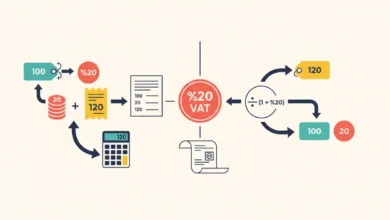
The final $1,000 payment is not received until five years from today, so it has a smaller present value than the first $1,000 payment received one month from now.
The Long-Form Calculation
The present value of annuity formula is a shortcut for discounting every payment individually.
Conceptually:
PV = PMT ÷ (1 + r) + PMT ÷ (1 + r)² + … + PMT ÷ (1 + r)ⁿ
For the $1,000 monthly example:
First payment:
$1,000 ÷ 1.005 ≈ $995.02
Second payment:
$1,000 ÷ 1.005² ≈ $990.07
The 60th payment:
$1,000 ÷ 1.005⁶⁰ ≈ $741.37
Adding all 60 discounted values produces approximately $51,725.56.
Present Value of Annuity vs Present Value
The basic present value formula values one future amount:
PV = FV ÷ (1 + r)^n
The present value of annuity formula values many equal payments.
If you have five unequal payments, the annuity formula is not appropriate. Each cash flow should instead be discounted individually and added together.
Annuity Factor
The expression:
[1 − (1 + r)^−n] ÷ r
is the present-value annuity factor.
Using the example:
Annuity Factor ≈ 51.72556
Then:
PV = $1,000 × 51.72556
PV = $51,725.56
Annuity factors are useful because the same factor can value any equal payment stream with the same rate and number of periods.
How the Discount Rate Changes Present Value
Holding the payment and number of periods constant:
Higher Discount Rate → Lower Present Value
Consider $1,000 monthly for 60 months.
At a lower rate, future payments are discounted less.
At a higher rate, those same payments are discounted more heavily.
This is why choosing an appropriate discount rate is one of the most important assumptions in a present-value calculation.
Present Value at a Zero Rate
When the discount rate is zero, the ordinary formula would require division by zero.
Economically, the answer becomes simple:
PV = PMT × n
For $1,000 over 60 periods:
PV = $1,000 × 60
PV = $60,000
Without a discount rate, there is no time-value adjustment.
How More Payments Change Present Value
Suppose the payment remains $1,000 per month and the discount rate stays unchanged.
A 10-year stream contains more cash flows than a five-year stream, so its present value is higher.
However, each additional distant payment contributes less present value than an otherwise identical near-term payment.
This creates diminishing additions to PV as the payment horizon becomes longer.
Present Value of Annuity Due
If payments occur at the beginning of each period, each payment arrives one period earlier.
The adjustment is:
PV of Annuity Due = PV of Ordinary Annuity × (1 + r)
Using the $51,725.56 ordinary-annuity value and a 0.5% monthly rate:
PV Due = $51,725.56 × 1.005
PV Due ≈ $51,984.19
Beginning-of-period payments are worth more because every payment is received earlier.
Solving for the Payment
The formula can be rearranged:
PMT = PV × r ÷ [1 − (1 + r)^−n]
Suppose:
- present value = $50,000;
- monthly rate = 0.5%;
- payments = 60.
Then:
PMT = $50,000 × 0.005 ÷ [1 − (1.005)^−60]
PMT ≈ $966.64
A present value of $50,000 corresponds to approximately $966.64 per month under those assumptions.
Solving for Present Value of Annual Payments
The formula works with annual periods as well.
Suppose:
- annual payment = $8,000;
- discount rate = 5%;
- number of years = 10.
PV = $8,000 × [1 − 1.05^−10] ÷ 0.05
The annuity factor is approximately:
7.721735
Therefore:
PV ≈ $8,000 × 7.721735
PV ≈ $61,773.88
The payment frequency changed, so the rate and period count changed with it.
Why Rate Periods Must Match
Suppose monthly payments use a 6% nominal annual rate.
Correct:
r = 6% ÷ 12 = 0.5% per month
Incorrect:
r = 6% per month
Using 6% in every monthly period would imply an enormous effective annual rate and severely understate the present value.
The broader quick finance math framework is useful for checking percentage conversions before applying more specialized formulas.
Present Value of Annuity in Real Estate
Recurring lease or rental cash flows can sometimes be analyzed using annuity mathematics when amounts are fixed and the time horizon is specified.
However, actual property cash flows may change because of:
- vacancy;
- rent growth;
- repairs;
- operating expenses;
- financing;
- taxes;
- terminal sale value.
The dedicated real estate deal math analysis therefore needs more than a basic level-annuity formula.
Present Value and Portfolio Risk
The discount rate is not the same thing as portfolio risk.
A present-value model can use an assumed rate to value future liabilities, while the assets funding those liabilities can experience:
- volatility;
- drawdowns;
- changing correlations;
- liquidity risk.
A mathematically precise PV does not eliminate uncertainty in the portfolio intended to fund the payments.
Present Value and Portfolio Rebalancing
Suppose a future spending stream has an estimated present value of $500,000.
The investment assets funding that liability might be allocated between stocks and bonds.
Over time, market movements can change those weights.
Portfolio rebalancing restores the target asset allocation, while present-value mathematics determines the estimated current value of the payment obligation.
The two calculations address different parts of the same planning problem.
Present Value of Annuity vs Future Value of Annuity
Present value asks:
What are future payments worth today?
Future value asks:
What will recurring payments accumulate to at a future date?
The cash-flow timing can be identical, but the valuation date changes.
Do not use a future-value annuity formula when the goal is to determine today’s equivalent value.
Unequal Cash Flows
Suppose payments are:
- Year 1 = $5,000;
- Year 2 = $6,000;
- Year 3 = $8,000.
The standard annuity formula assumes equal payments, so it does not apply directly.
Instead:
PV = $5,000 ÷ (1 + r) + $6,000 ÷ (1 + r)² + $8,000 ÷ (1 + r)³
Each payment must be valued individually.
Deferred Annuity
Sometimes payments begin several periods from today rather than one period from today.
In that case:
- calculate the annuity’s value immediately before the first payment period;
- discount that value back through the deferral period.
This two-step process prevents the payment stream from being incorrectly treated as though it begins immediately.
Present Value Is Sensitive to Assumptions
Suppose the payment stream is fixed but the discount rate changes from 4% to 7%.
The resulting present value can change materially.
Therefore, when comparing two PV estimates, do not examine only the final dollar amount.
Also compare:
- rate;
- payment timing;
- number of payments;
- payment amount;
- whether cash flows are level.
Present Value Is Not the Nominal Payment Total
This distinction is fundamental.
Nominal Total = PMT × n
Present Value = Discounted Value of Those Payments Today
At positive rates:
PV < Nominal Total
unless unusual payment timing or other assumptions change the structure.
Common Present Value of Annuity Mistakes
One mistake is using an annual rate with monthly periods.
Another is confusing ordinary-annuity and beginning-of-period payments.
People can also use the formula for unequal cash flows.
A further mistake is comparing total future payments directly with present value as though both numbers were measured at the same date.
Frequently Asked Questions
What is the present value of an annuity?
It is the current equivalent value of a series of equal recurring future payments.
What is the present value of annuity formula?
PV = PMT × [1 − (1 + r)^−n] ÷ r
What does PMT mean?
PMT is the equal payment received or paid each period.
What does r mean?
r is the discount rate per payment period.
What does n mean?
n is the total number of payments.
Why is present value lower than total future payments?
At a positive discount rate, later cash flows are worth less today.
How do I calculate an annuity due?
PV Due = PV Ordinary × (1 + r)
when every payment occurs one period earlier.
What happens when the discount rate increases?
Present value decreases, all else equal.
Can I use the annuity formula for unequal payments?
No. Unequal cash flows should generally be discounted individually.
Can I use annual interest with monthly payments?
Only after converting the rate into a consistent monthly periodic rate.
Is present value of annuity the same as present value?
It is a specialized present-value formula for a finite series of equal recurring payments.
Why is the calculation useful?
It makes recurring future obligations or income streams comparable in today’s dollars within a broader Savings & Investing analysis.