Finance
-

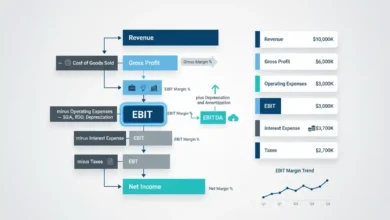
EBIT: Formula, Meaning, Calculation & Examples
EBIT means earnings before interest and taxes. It measures business earnings before deducting interest expense and income taxes, helping analysts…
Read More » -
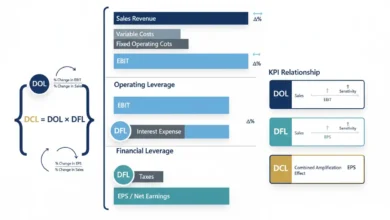
Degree of Combined Leverage: Formula & Examples
The degree of combined leverage, or DCL, measures how sensitive a company’s earnings available to shareholders are to a percentage…
Read More » -
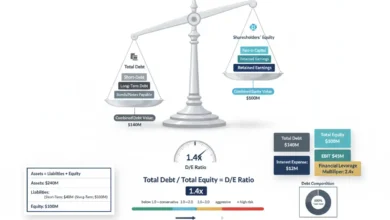
Debt-to-Equity Ratio: Formula, Meaning & Examples
The debt-to-equity ratio, often abbreviated D/E ratio, compares a company’s debt with the amount of shareholder equity supporting the business.…
Read More » -
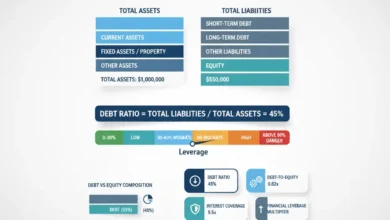
Debt Ratio: Formula, Meaning & Examples
The debt ratio measures how much of a company’s asset base is financed by debt under the definition used in…
Read More » -
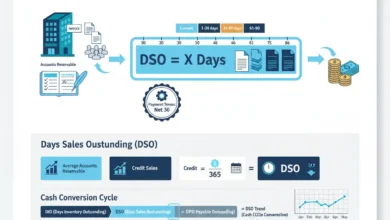
Days Sales Outstanding: Formula, DSO & Examples
Days sales outstanding, commonly abbreviated DSO, estimates how long a company takes, on average, to collect payment after making sales…
Read More » -
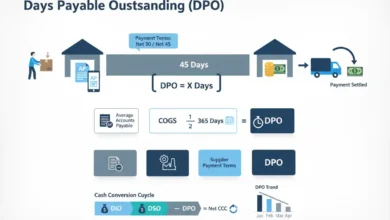
Days Payable Outstanding: Formula, DPO & Examples
Days payable outstanding, commonly abbreviated DPO, estimates how long a company takes, on average, to pay suppliers and other trade…
Read More » -
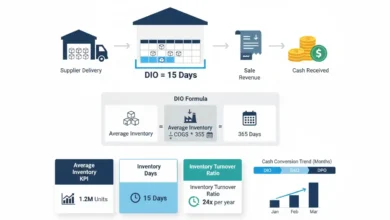
Days Inventory Outstanding: Formula, DIO & Examples
Days inventory outstanding, commonly abbreviated DIO, estimates the average number of days inventory remains on hand before being sold or…
Read More » -
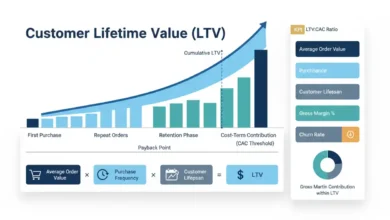
Customer Lifetime Value: Formula, CLV & Examples
Customer lifetime value estimates the economic value a business expects to receive from a customer over the customer’s relationship with…
Read More » -
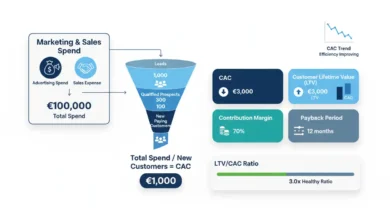
Customer Acquisition Cost: Formula, CAC & Examples
Customer acquisition cost, commonly abbreviated CAC, measures how much a business spends to acquire a new customer during a defined…
Read More » -
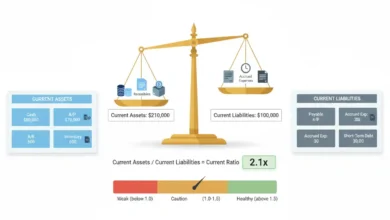
Current Ratio: Formula, Calculation & Examples
The current ratio measures a company’s current assets relative to its current liabilities. It is a short-term liquidity ratio used…
Read More »