Finance
-

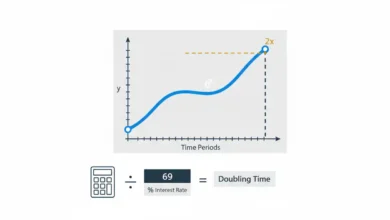
Rule of 69: Continuous Compounding Shortcut
The Rule of 69 is a mental-math shortcut for estimating how long money takes to double when growth is modeled…
Read More » -
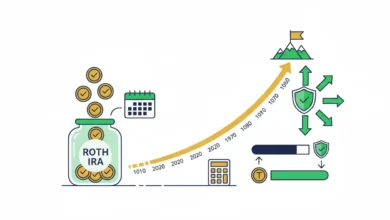
Roth IRA: Growth & Contributions
A Roth IRA is a U.S. individual retirement arrangement funded with nondeductible contributions that can provide tax-free qualified distributions when…
Read More » -
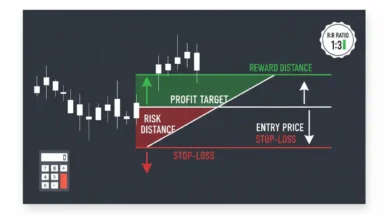
Risk-Reward Ratio: Trading Basics
The risk-reward ratio compares the amount a trader is prepared to lose on a trade with the potential profit if…
Read More » -
Risk-Adjusted Return: Formula, Meaning & Example
Risk-adjusted return evaluates investment performance relative to the amount or type of risk taken to produce that performance. A 12%…
Read More » -
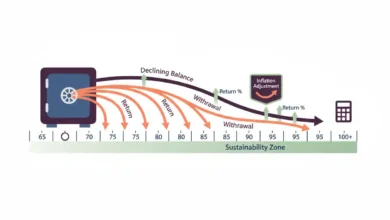
Retirement Withdrawals: How Long Money Lasts
Retirement withdrawals determine how accumulated savings are converted into income after regular employment ends. A $500,000 portfolio supporting $40,000 of…
Read More » -
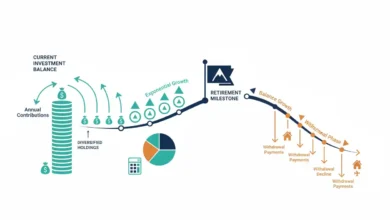
Retirement Savings: Growth & Withdrawals
Retirement savings grow through a combination of current assets, future contributions, investment returns, and time. Suppose someone already has $200,000…
Read More » -
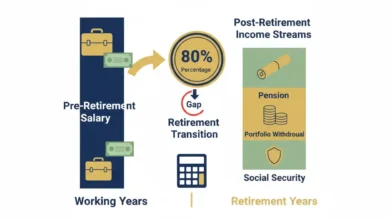
Retirement Replacement Ratio: Formula, Meaning & Example
The retirement replacement ratio measures retirement income as a percentage of pre-retirement income. If someone earns $100,000 before retirement and…
Read More » -
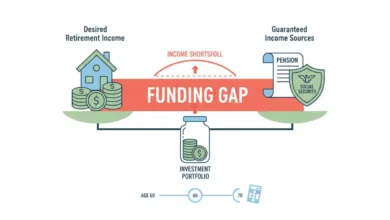
Retirement Income Gap: Formula, Meaning & Example
A retirement income gap is the difference between the income you expect to need in retirement and the reliable or…
Read More » -
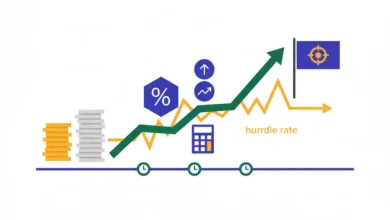
Required Rate Of Return: Formula, Meaning & Example
Required rate of return is the minimum investment return needed to satisfy a particular financial objective or compensate an investor…
Read More » -
Required Minimum Distributions: RMD Rules
Required minimum distributions, commonly called RMDs, are minimum amounts that certain retirement-account owners must withdraw each year after reaching the…
Read More »