Finance
-

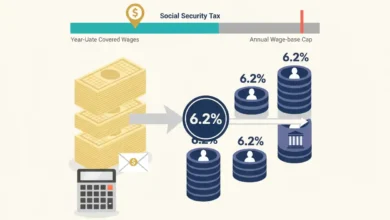
Social Security Tax: Formula, Meaning & Example
Social Security tax is a U.S. payroll tax applied to covered wages up to an annual wage-base limit. For 2026,…
Read More » -
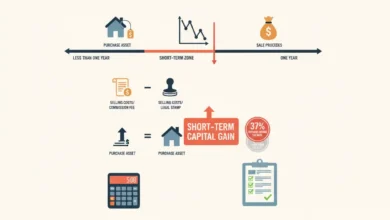
Short-Term Capital Gains: Formula, Meaning & Example
Short-term capital gains generally arise when a capital asset is sold for more than its adjusted basis after being held…
Read More » -
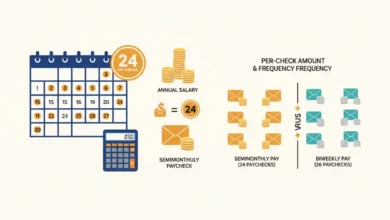
Semimonthly Pay: Formula, Meaning & Example
Semimonthly pay means an employee receives two regular paychecks each month. That creates: 2 Paychecks × 12 Months = 24…
Read More » -
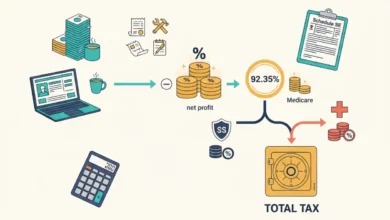
Self-Employment Tax: Formula, Meaning & Example
Self-employment tax is the U.S. federal tax used to cover Social Security and Medicare obligations on qualifying net earnings from…
Read More » -
Sales Tax Rate: Formula, Meaning & Example
The sales tax rate is the percentage applied to the taxable portion of a purchase to determine the amount of…
Read More » -
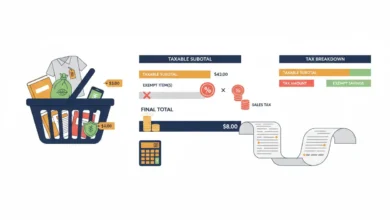
Sales Tax: Total Price & Exemptions
Sales tax is a transaction tax commonly calculated as a percentage of the taxable purchase price. If a taxable item…
Read More » -
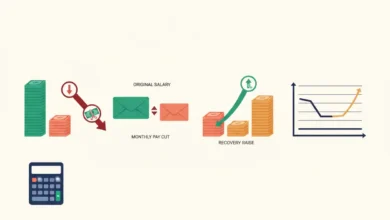
Salary Reduction Percentage: Formula, Meaning & Example
Salary reduction percentage measures how much compensation falls relative to the original salary. If salary decreases from $80,000 to $72,000:…
Read More » -
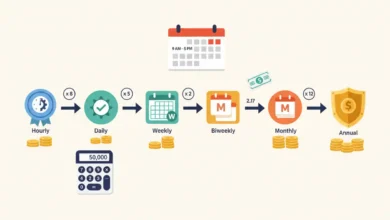
Salary Conversions: Hourly to Annual
Salary conversions express the same compensation amount across different periods. A $37.50 hourly equivalent becomes $78,000 annually when the calculation…
Read More » -
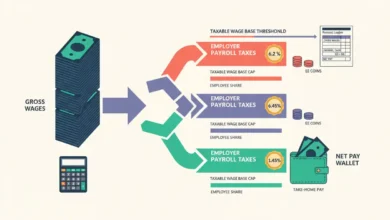
Payroll Tax: Formula, Meaning & Example
Payroll tax is a tax calculated from wages or other covered payroll compensation. The basic arithmetic is: Payroll Tax =…
Read More » -
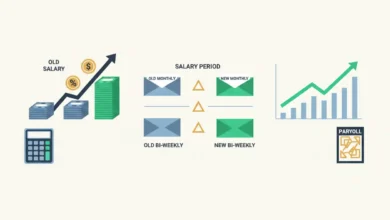
Pay Raises: New Salary & Percent Increase
Pay raises increase an employee’s compensation from an existing salary or wage to a new amount. A raise can be…
Read More »